
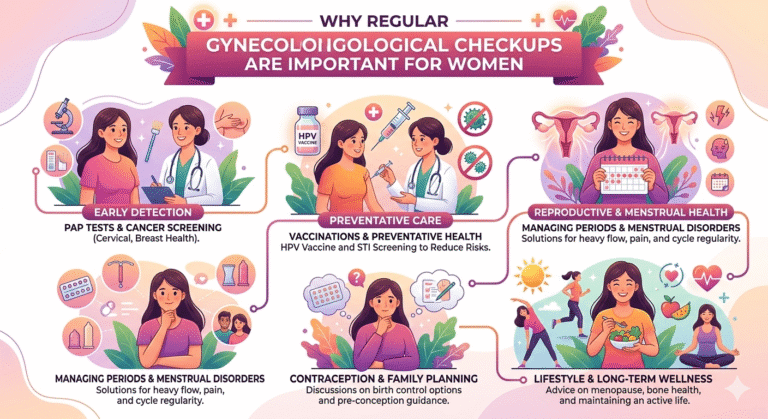
A woman’s body keeps rewriting its own rules as the years go by. Puberty flips everything upside down, then comes the reproductive years with cycles, contraception, maybe pregnancies, deliveries, and the postpartum recovery that can feel endless. Later there’s perimenopause with its unpredictable hot flashes and sleep interruptions, and eventually menopause settles in for the long haul. A lot of those shifts happen so gradually you barely notice until something doesn’t feel right anymore. That slow creep is exactly why regular gynecological checkups aren’t optional extras. They give us a baseline, let us spot what’s changing before it becomes a crisis, and help you understand what “normal for you” actually looks like.
Spotting Trouble That Doesn’t Announce Itself
Plenty of gynecological problems stay quiet for a long time. Cervical cell changes that could turn precancerous often give zero warning signs no pain, no bleeding, nothing. Small fibroids can grow without making periods noticeably heavier at first. Ovarian cysts might sit there harmlessly for years. Early endometriosis can cause vague discomfort that gets blamed on “normal cramps.” A simple Pap smear combined with HPV testing, a careful pelvic exam, and occasionally a quick ultrasound catch these things years before they start causing real trouble. Finding them early usually means a small office procedure or watchful waiting instead of major surgery or months of dealing with complications.
Seeing the Long-Term Story, Not Just One Snapshot
A single visit shows where things stand right now. Coming back regularly shows the full timeline. Periods that used to arrive like clockwork and now show up every 18 days or disappear for months, a breast lump that feels different from last year, vaginal dryness that’s slowly getting more uncomfortable those gradual shifts only become obvious when we compare year to year. Keeping track of your blood pressure, weight trends, thyroid numbers, hemoglobin levels, and hormone markers over time makes it much easier to catch when something is drifting off course. PCOS can sneak in quietly; thyroid slowdown can happen without you feeling obviously tired yet. Having the same doctor see you repeatedly means those little changes don’t slip through the cracks.
Stopping Problems Before They Snowball
Heavy periods don’t always feel dramatic month to month, but over time they drain iron stores until you’re exhausted and pale and wondering why everything tires you out. Chronic irregular or heavy bleeding raises the risk of the uterine lining getting too thick, which can lead to hyperplasia or, rarely, cancer. Regular visits let us step in early, maybe with medication, an IUD, or a minor procedure before anemia sets in or the lining becomes a bigger issue. Bone density starts slipping in your 30s and speeds up after menopause; checking vitamin D levels, calcium habits, and when to do a bone scan helps avoid fractures down the road. Estrogen’s protective effect on the heart fades too routine blood pressure and cholesterol checks during gyn visits catch rising risks early.
Making Family Planning and Fertility Discussions Practical
Whether you’re focused on avoiding pregnancy right now, thinking about trying soon, or quietly wondering why it hasn’t happened yet, an annual check is the perfect time to talk without pressure. Birth control that works great at 25 might not fit at 32. Preconception tweaks: getting weight in a healthier range, sorting thyroid, switching any medicines that aren’t safe for pregnancy, checking for genetic carrier status set you up better when you’re ready. If conception is taking longer, we can discuss simple markers like AMH levels, antral follicle count on ultrasound, or basic partner testing so you have real information instead of endless worry.
The Part That’s Not Just Physical
Gynec appointments aren’t only about exams and tests. They’re one of the few places many women feel safe bringing up things they don’t talk about anywhere else pain with intercourse, dropping libido, cycle-related mood crashes, worries about what menopause will really feel like, or postpartum feelings that haven’t been lifted. Having that regular, private space to air those concerns cuts down on feeling alone with them. Often it’s just hearing “this is common and here’s what usually helps” that makes the difference.
Even When You Feel Perfectly Fine
If nothing hurts and everything seems okay, it’s still worth showing up. Screening guidelines shift over time HPV vaccine updates, changes in how often to do Pap/HPV tests, new risk factors we watch for but the core idea stays the same: catching things early and preventing them is far easier than fixing them later.
If you’ve let your last checkup slide or you’ve got a couple of small things nagging at you that you’re not sure are worth mentioning, it’s a good moment to get it done. You can Consult Best Gynecologist in Lajpat Nagar New Delhi for a calm, thorough visit that covers screening basics plus whatever’s on your mind. Or get advice from Best Gynecologist in South Delhi to go over your history, run the right exams and tests, and leave with a clear picture of what’s normal for your body and what might need a little attention. Regular checkups aren’t about hunting for problems they’re about protecting the steady health you already have. That simple habit tends to matter more than most people expect.
Read more blogs on youthfulyarn.com