
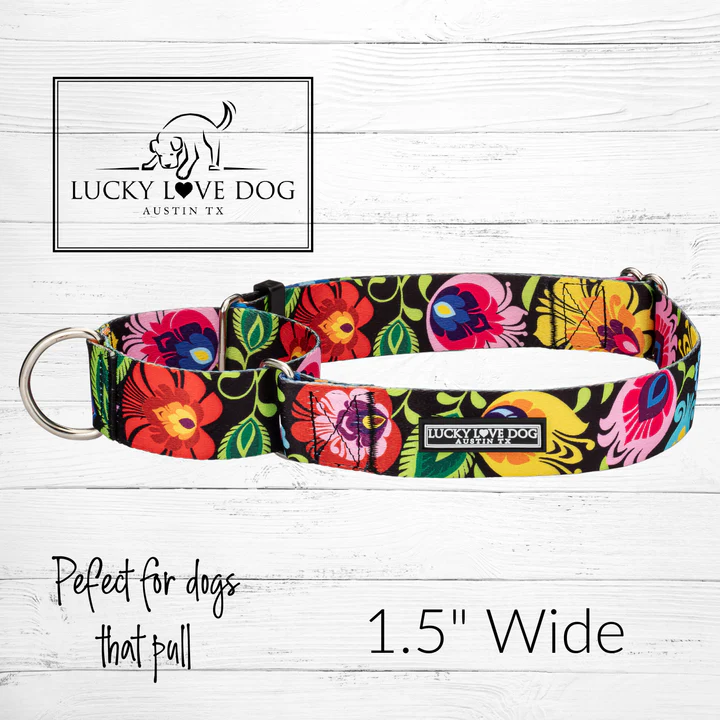
The bond you share with your dog is precious, and their safety is paramount, especially during walks. For many dog owners, especially those with “escape artists” or breeds with distinct neck shapes like Greyhounds and Whippets, a standard flat collar simply doesn’t offer enough security. This is where the specialized design of the martingale collar comes in. And when safety, comfort, and control are top priorities, the extra support of a wider design makes Wide Martingale Dog Collars the superior choice.
This comprehensive guide will delve into everything you need to know about this increasingly popular piece of dog gear—from its unique mechanism to why a wide version provides unmatched benefits for specific breeds and behaviors.
Why Wide Martingale Dog Collars are the Smart Choice for Safety and Comfort
The martingale collar, often called a “no-slip” or “limited-slip” collar, operates on a simple, humane principle. It consists of two loops: a larger loop that goes around the dog’s neck and a smaller control loop. The leash attaches to the D-ring on the smaller loop. When your dog pulls on the leash or tries to back out of the collar, the smaller loop pulls taut, causing the larger loop to tighten evenly around the neck—but only to a safe, predetermined point.
Choosing a wide martingale dog collars amplifies these benefits, making them an essential tool for secure and comfortable walking.
Enhanced Safety: Preventing the Great Escape
The primary appeal of any martingale collar is its anti-escape function. The limited-slip mechanism is designed to prevent dogs from easily slipping out of their collar. For breeds like Greyhounds, Whippets, and Salukis, whose heads are often narrower than their necks, this design is a lifesaver. A standard collar can slide right over their ears.
The extra width of wide martingale dog collars further reinforces this security. The larger surface area is more difficult for a dog to manipulate or back out of, giving you crucial seconds of control in a stressful situation—like a sudden reaction to a squirrel or a loud noise.
Superior Comfort and Pressure Distribution
Comfort is where the wide martingale dog collars truly shine, especially for powerful pullers or dogs with sensitive throats.
- Even Pressure: When a dog pulls, a narrow collar concentrates pressure on a small area of the neck, which can lead to discomfort, strain on the trachea, or potential injury. A wider collar, such as a 1.5-inch or 2-inch martingale, distributes that limited-slip pressure across a much larger surface area. This makes the gentle tightening signal much more comfortable and safer for your dog’s neck and spine.
- Protection for Sensitive Throats: For breeds prone to tracheal issues or those with long, slender necks (like Sighthounds), the wider, often padded, design offers a supportive buffer. The pressure is spread laterally, away from the sensitive front of the neck.
- Relaxed Fit: When the leash is slack, a properly fitted martingale collar should sit loosely and comfortably on your dog’s neck, preventing the constant chafing and rubbing that can occur with a standard collar that must be kept tight at all times.
Who Needs Wide Martingale Dog Collars?
While any dog can benefit from the security of a martingale, the wide version is particularly suited to specific dogs based on their body type and behavior.
Sighthounds and Narrow-Headed Breeds
This is the classic use case. Sighthounds (Greyhounds, Whippets, Italian Greyhounds, Borzois, etc.) are built for speed and have a distinctly narrow head compared to their neck circumference. The martingale was invented specifically to prevent these breeds from slipping their collars. The wide martingale dog collars are the gold standard for these dogs, providing both the no-slip security and the neck support their elegant, yet sensitive, frames require.
Large and Strong Breeds
For owners of large, powerful breeds like Great Danes, Mastiffs, or even strong Labrador Retrievers and Huskies, a wide collar provides the robust strength and control needed to manage a large, motivated dog. A 2-inch wide collar is simply sturdier and more durable than a 1-inch strap, instilling greater confidence in the handler.
The Dedicated Escape Artist
If your dog is a master of the “Houdini maneuver”—backing out of their collar when spooked or excited—a wide martingale is one of the most effective pieces of equipment you can use. The security it offers can be the difference between a minor scare and a lost dog.
How to Measure and Ensure a Perfect Fit for Wide Martingale Dog Collars
The effectiveness and safety of a martingale collar hinge entirely on its correct fit. A poorly fitted martingale is either ineffective or uncomfortable. For a safe and comfortable fit, you need three key measurements:
The Three Essential Measurements
- Measurement A (Largest Part of the Head): Measure all the way around the widest part of your dog’s head, just in front of the ears. This is the minimum size the collar must expand to so it can comfortably slip on and off.
- Measurement B (Neck at Collar Position): Measure around the neck where the collar will naturally sit (typically closer to the base of the neck).
- Measurement C (Behind the Ears): Measure the smallest part of the neck, right behind the ears. This is the maximum tightness the collar should reach when the control loop is pulled taut.
The Martingale Fitting Rule
When the control loop (the smaller loop) is pulled tight, the two metal or plastic slides on the larger loop should meet, but not touch. There should be at least a two-finger width gap between the two slides for a proper, non-choking fit.
- The collar should be sized so that Measurement A (widest head part) is smaller than the fully opened circumference of the collar.
- The collar should be adjusted so that when the dog pulls, the tightened collar (at Measurement C) cannot slip over the dog’s ears and head.
Pro-Tip on Width: For most Sighthounds and large breeds, a 1.5-inch (4cm) to 2-inch (5cm) width is ideal. Smaller dogs, even if they are escape artists, may find a 1-inch or 1.5-inch collar more comfortable. Always consider your dog’s overall size and neck length; a 2-inch collar on a tiny dog will look bulky and may rub against their jaw.
Best Practices and Maintenance for Wide Martingale Dog Collars
Like any training or safety tool, proper usage is essential to maximize the benefits of your martingale collar.
Do’s and Don’ts of Martingale Use
| Do’s | Don’ts |
| Use for walks and supervised training sessions only. | Never leave your dog unattended while wearing a martingale, as the loose fit could snag on objects. |
| Adjust the fit regularly, especially as your dog’s weight or coat thickness changes. | Do not use it as a primary tie-out or a continuous ID tag collar (use a separate, snug flat collar for tags). |
| Combine with positive reinforcement to teach loose-leash walking, treating the tightening as a gentle cue. | Don’t use the tightening action to punish or jerk your dog sharply; a gentle pull is all that’s required. |
Material and Maintenance
Wide martingale dog collars come in a variety of durable materials, each with its own benefits:
- Nylon/Webbing: Durable, lightweight, and comes in countless designs. Easy to machine wash.
- Padded/Lined Fabric (e.g., fleece, velvet, cotton): Extremely popular for Sighthounds with sensitive skin or thin coats, offering maximum comfort and preventing chafing. Often requires hand-washing.
- Leather: Classic look, very durable, and softens beautifully over time. Requires periodic leather conditioning.
Regularly inspect the control loop, D-rings, and stitching for wear and tear, especially if your dog is a heavy puller.
For guidance on teaching your dog to walk nicely without pulling, check out our guide on Positive Reinforcement Training Techniques.
Conclusion
Wide martingale dog collars represent a perfect blend of security, comfort, and style, making them a top-tier choice for a diverse range of dogs. From the lithe frame of a Greyhound to the power of a working breed, the unique limited-slip action, combined with the pressure-distributing width, ensures a safe and humane walking experience. By taking the time to measure correctly and adhering to best practices, you equip yourself with an invaluable tool that offers peace of mind and allows you to enjoy your daily adventures with your beloved companion, secure in the knowledge that the great escape artist has finally met their match.