
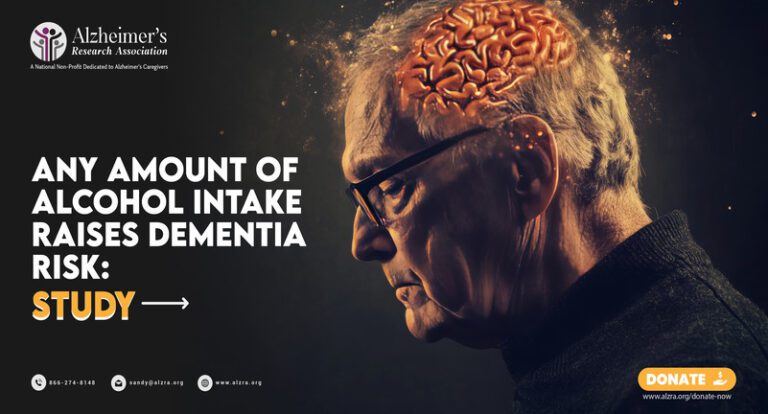
According to a recent large-scale study, drinking alcohol in any quantity may raise the risk of dementia. The research conducted by the University of Oxford, Yale University, and the University of Cambridge refutes earlier theories that light-to-moderate drinking can prevent dementia.
Any amount of alcohol can have an impact on a person’s health [1]. Alcohol use is associated with high blood pressure, heart disease, liver disease, and at least seven types of cancers, including colon and breast cancer [2,3].
High alcohol use can also increase a person’s risk of dementia. However, several observational studies have suggested that drinking small amounts of alcohol does not increase the risk or may even lower it [4].
A new genetic investigation discovered that, while the risk of dementia increases with higher alcohol consumption, even little alcohol consumption can increase a person’s risk of developing the condition.
The researchers conducted both observational and genomic analyses. While the observational study indicated that moderate drinkers had a lower risk of dementia than abstainers, the genetic study found that any alcohol consumption was associated with an elevated risk.
The journal BMJ Evidence-Based Medicine published the research [5].
The Effects of Alcohol on the Brain
Heavy drinking is known to have harmful effects on the brain. The National Institute on Alcohol Abuse and Alcoholism states that alcohol damages brain regions that regulate speech, memory, balance, and judgment, increasing the risk of injuries and other detrimental effects [6].
Alcohol is neurotoxic because it kills neurons, accelerates vascular injury, causes brain atrophy, and interferes with neurotransmitter systems. Long-term usage can affect thiamine metabolism, resulting in cognitive impairments, and even low doses have been associated with negative brain imaging findings such as diminished gray matter volume [7,8].
Additionally, alcohol raises oxidative stress and systemic inflammation, both of which are associated with neurodegeneration.
Genetic and Observational Analysis
In this study, the researchers conducted an observational analysis of nearly 560,000 individuals from the UK Biobank and the U.S. Million Veteran Program.
They evaluated participants’ drinking using questionnaires and the Alcohol Use Disorders Identification Test (AUDIT-C) clinical screening test. After that, 14,540 individuals experienced dementia throughout the course of an average of 4 years of participant monitoring.
They discovered U-shaped correlations between alcohol consumption and the risk of dementia in the observational analysis. Non-drinkers and heavy drinkers both had a higher risk of dementia than those who consumed fewer than seven drinks per week.
However, genetic analysis yielded different results.
Key Findings: Any Alcohol Consumption Raises Dementia Risk
The following are the key findings of the study.
- When compared to non-drinking and heavy drinking, observational analyses appeared to support earlier findings that current low and moderate drinking is associated with a lower risk of dementia. However, some current non-drinkers were previously heavy drinkers, which may explain their higher dementia risk in comparison to consistently low drinkers.
- However, genetic analyses showed a steadily rising trend of increased dementia risk with larger alcohol intakes, indicating that alcohol consumption at any level raises the risk of dementia without providing any evidence of a protective benefit.
- A person’s risk of dementia increased by 16% when their genetically predicted risk of alcohol use disorder doubled, and by 15% when their weekly alcohol use increased by three times.
- The study also revealed that individuals who later experienced dementia cut back on their alcohol consumption before being diagnosed, which could account for earlier results of alcohol’s protective effects rather than its actual benefits.
According to Dr. Anya Topiwala, Senior Clinical Researcher at Oxford Population Health, Consultant Psychiatrist, and the study’s principal author, their results refuted the widely held notion that low levels of alcohol consumption are good for brain function. Genetic evidence did not support a protective effect but suggested the opposite. Reducing alcohol intake across the population may be crucial in preventing dementia because even light or moderate drinking may raise the risk of dementia.
The Results Reinforce the Need to Minimize Alcohol Intake
According to Dr. Joel Gelernter, a professor at Yale University and the study’s senior author, these findings have clinical implications and advance the understanding of the connection between alcohol and dementia. Previously, medical knowledge seemed to support the idea that light alcohol consumption would be beneficial for brain health, but this research adds to the evidence that this is untrue.
This study adds to emerging evidence that alcohol use, even at moderate levels, may have no safe threshold in terms of brain health, underscoring the need for preventive strategies to minimize alcohol intake in the general population.
Alzheimer’s Research Association is a non-profit organization dedicated to helping caregivers of Alzheimer’s disease and dementia. We provide the latest information and news about the illness and helpful tips to help caregivers cope with their daily caregiving challenges. We realize the most important thing that a caregiver needs is financial assistance. Therefore, we provide grants to caregivers to ease their financial burden. Caregivers can apply for grants here: https://www.alzra.org/grant-applications/.
You can also help caregivers in their endeavor by donating as much as possible: https://www.alzra.org/donate-now/.
References
- No level of alcohol consumption is safe for our health. World Health Organization. https://www.who.int/europe/news/item/04-01-2023-no-level-of-alcohol-consumption-is-safe-for-our-health. Published Online: 4th January. 2023. Accessed: 20th November, 2025.
- Alcohol Use and Your Health. CDC. https://www.cdc.gov/alcohol/about-alcohol-use/index.html. Published Online: 14th January. 2025. Accessed: 20th November, 2025.
- Alcohol and Cancer Risk. U.S. Department of Health and Human Services. https://www.hhs.gov/surgeongeneral/reports-and-publications/alcohol-cancer/index.html. Accessed: 20th November, 2025.
- Sabia, S., Fayosse, A., Dumurgier, J., Dugravot, A., Akbaraly, T., Britton, A., Kivimäki, M. and Singh-Manoux, A., 2018. Alcohol consumption and risk of dementia: 23 year follow-up of Whitehall II cohort study. bmj, 362.
- Topiwala, A., Levey, D.F., Zhou, H., Deak, J.D., Adhikari, K., Ebmeier, K.P., Bell, S., Burgess, S., Nichols, T.E., Gaziano, M. and Stein, M., 2025. Alcohol use and risk of dementia in diverse populations: evidence from cohort, case–control and Mendelian randomisation approaches. BMJ Evidence-Based Medicine.
- Alcohol and the Brain: An Overview. National Institute on Alcohol Abuse and Alcoholism. https://www.niaaa.nih.gov/publications/alcohol-and-brain-overview. Published Online: 2022. Accessed: 20th November, 2025.
- Nutt, D., Hayes, A., Fonville, L., Zafar, R., Palmer, E.O., Paterson, L. and Lingford-Hughes, A., 2021. Alcohol and the brain. Nutrients, 13(11), p.3938.
- Lang, K. Even small amounts of alcohol may increase dementia risk, study finds. Medical News Today. https://www.medicalnewstoday.com/articles/even-small-amounts-alcohol-may-increase-dementia-risk-study. Published Online: 25th September, 2025. Accessed: 20th November, 2025.
- Any level of alcohol consumption increases risk of dementia. University of Oxford. https://www.ox.ac.uk/news/2025-09-24-any-level-alcohol-consumption-increases-risk-dementia. Published Online: 24th September, 2025. Accessed: 20th November, 2025.
- Any alcohol use increases dementia risk, study finds. BBC. https://www.bbc.com/news/articles/c1l8q29jjezo. Published Online: 24th September, 2025. Accessed: 20th November, 2025.