
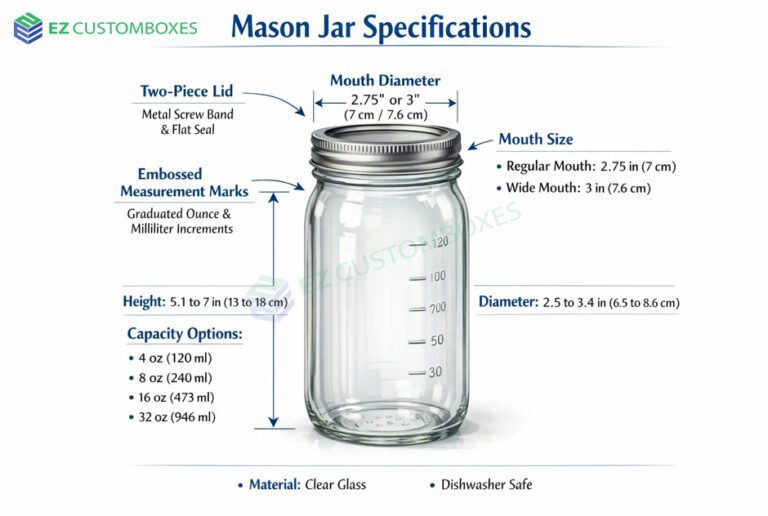
Introduction: Why Mason Jar Size Matters More Than You Think
Mason jars aren’t one-size-fits-all. Choosing the wrong jar size can lead to wasted space, spoiled food, or unnecessary mess. This mason jar specifications Guide breaks down how to choose the right jar and why it’s important, whether you’re canning food, organizing your pantry, or decorating your home.
By the end of this guide, you’ll know exactly which mason jar size fits your needs—and why it matters.
What Is a Mason Jar? (Quick Overview)
A mason jar is a glass container originally designed for food preservation. Today, it’s used for:
- Home canning
- Food storage
- Beverages
- Crafts and décor
- Meal prep and organization
They come in multiple sizes and mouth types, each serving a specific purpose.
Mason Jar Sizes Explained (With Common Uses)
Small Mason Jars (4 oz – 8 oz)
Best for:
- Spices
- Jams & jellies
- Sauces
- Party favors
Why choose small jars?
They’re perfect for portion control and gifting. Less waste, more precision.
Medium Mason Jars (12 oz – 16 oz / Pint)
Best for:
- Drinking glasses
- Overnight oats
- Pickled vegetables
- Pantry storage
Why they’re popular:
These jars balance capacity and convenience, making them the most versatile option.
Large Mason Jars (24 oz – 32 oz / Quart)
- Meal prep
- Soups and broths
- Fermented foods
- Bulk storage
Why size matters here:
Larger jars reduce the number of containers you need and keep food fresh longer.
Extra-Large Mason Jars (64 oz / Half-Gallon)
Best for:
- Cold brew coffee
- Bulk dry goods
- Beverage dispensers
Why choose extra-large jars?
Ideal for high-volume storage, but not recommended for beginners in canning.
How to Choose the Right Mason Jar Size
Ask yourself these questions before buying:
- What will I store? (liquids, solids, dry goods)
- How much do I need? (single serving or bulk?)
- Is it for canning or décor?
- Do I need a wide mouth or regular mouth?
Wide Mouth vs Regular Mouth
- Wide mouth: Easier filling and cleaning
- Regular mouth: Better for liquids and pouring
Why Choosing the Correct Mason Jar Size Is Important
Choosing the right size helps you:
- Prevent food spoilage
- Save storage space
- Improve organization
- Ensure safe canning practices
- Reduce waste and cost
Using the wrong jar can cause sealing failures or food contamination—especially when canning.
Mason Jar Size Chart (Quick Reference)
- 4 oz: Samples, spices, favors
- 8 oz: Jams, desserts
- 16 oz (Pint): Drinks, pantry items
- 32 oz (Quart): Meals, soups
- 64 oz: Bulk storage, beverages
Frequently Asked Questions (FAQs)
What is the most common mason jar size?
The 16 oz (pint) mason jar is the most commonly used due to its versatility.
Which mason jar size is best for canning?
Pint and quart jars are best for beginners. Always follow tested canning guidelines.
Are mason jars safe for hot liquids?
Yes, but only tempered mason jars designed for canning should be used with hot liquids.
Can I use mason jars for dry food storage?
Absolutely. They’re excellent for flour, rice, beans, and pasta.
Do mason jar lids fit all sizes?
Lids vary by mouth size, not jar height. Match wide mouth with wide mouth lids.
Final Thoughts: Choose Smart, Store Better
The right mason jar size makes storage easier, food safer, and organization smarter. Whether you’re preserving food or styling shelves, choosing the correct mason jar sizes matters.
Takeaway: Start with pint and quart jars, then expand based on your needs.