
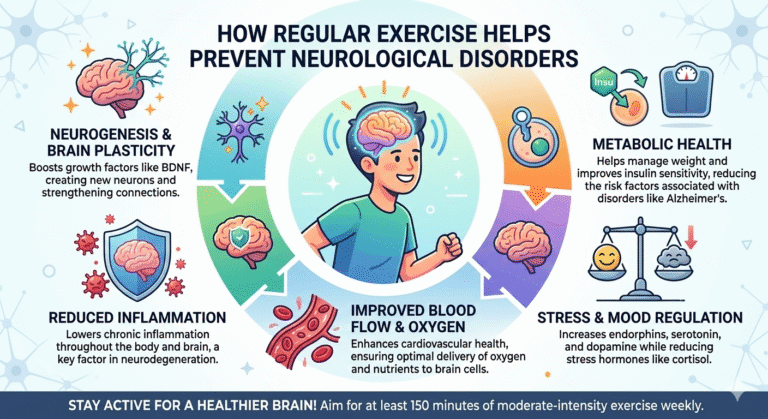
Hey, I’m Dr. Vikas Kumar, neurosurgeon and spine specialist trained at RIMS Ranchi and still right here seeing patients from Ranchi, different parts of Jharkhand, and sometimes people coming in from quite far when neurological symptoms or spine trouble have already started messing with their daily routine. One thing I hear all the time is “Doctor, can exercise really stop brain or nerve problems from happening?” The honest answer is yes, it’s probably the single strongest, most proven thing we have to lower the odds of many neurological conditions. Moving your body regularly doesn’t just keep your heart pumping and muscles strong; it directly shields the brain, spinal cord, and nerves in ways that show up again and again in long-term research and in the people I treat. Here’s exactly how it helps and why it’s worth making time for.
Better Blood Flow and Healthier Brain Vessels
Your brain is a huge oxygen and sugar user even when you’re just sitting still it takes about a fifth of everything your body has. Anything that improves blood delivery helps a ton. Exercise opens up cerebral blood flow, makes small arteries tougher and more flexible, and keeps the inner lining of vessels healthy. That directly drops the chance of ischemic stroke, he kind where a clot blocks flow, the most common stroke we see. Steady aerobic stuff like brisk walking, cycling, or swimming also brings blood pressure down, fixes cholesterol numbers, cuts inflammation, and reduces small-vessel damage that leads to vascular dementia and those tiny lacunar strokes. People who stay consistently active cut their stroke risk by 25–30% compared to folks who barely move.
Grows New Brain Cells and Strengthens Connections
When you exercise, your body pumps out more brain-derived neurotrophic factor (BDNF) think of it as fertilizer for brain cells. BDNF sparks new neuron growth (especially in the hippocampus, the memory hub), builds stronger links between existing neurons, and shields them from dying off. That’s why people who keep moving tend to have sharper memory, better learning, and more “cognitive reserve” the brain’s backup system that lets it keep functioning even when some damage happens. Long-term studies show folks who stay active through middle age and beyond have 30–40% lower risk of Alzheimer’s and other dementias. Even if mild cognitive changes have already started, regular exercise slows the slide toward full-blown dementia.
Cuts Down Inflammation and Oxidative Damage
Ongoing low-level inflammation and too many free radicals quietly injure neurons, speed up brain aging, and fuel Parkinson’s, Alzheimer’s, MS relapses, and some stroke damage. Exercise dials back those inflammatory signals (CRP, IL-6) and ramps up the body’s own antioxidant defenses. It also calms overactive immune cells in the brain (microglia) that can start attacking healthy tissue. That anti-inflammatory power is a big reason active people get fewer neurodegenerative diseases and bounce back better after brain events.
Keeps Blood Sugar Steady and Protects Against Neuropathy
Type 2 diabetes is a massive driver of stroke, cognitive decline, peripheral neuropathy, and tiny-vessel brain damage. Exercise makes your body more sensitive to insulin, drops fasting sugar levels, and keeps HbA1c in a healthy zone. Stable blood sugar protects both big arteries (lowering stroke odds) and the tiny ones feeding the brain and peripheral nerves. People who move regularly have far lower rates of diabetic neuropathy that burning, numb, weak feeling in feet and hands that so many patients end up fighting.
Supports the Spine and Prevents Nerve Pinching
For the spine and spinal cord, regular movement plus core strength work is protective gold. Strong back and abdominal muscles hold the vertebrae steady, take abnormal pressure off discs, and cut the chance of degenerative disc disease, herniations, spinal stenosis, and spondylolisthesis. Exercise also fixes posture and keeps flexibility good, so you avoid that forward-head hunch that squeezes cervical nerves or the low-back slouch that irritates lumbar roots. Active people simply have fewer bouts of sciatica, radiculopathy, and cord compression from chronic wear.
Lifts Mood and Cuts Stress-Related Brain Risks
Exercise triggers endorphins, serotonin, and dopamine, the natural feel-good chemicals that ease depression and anxiety. Long-term stress and depression raise stroke risk, speed cognitive decline, and worsen outcomes in neurological conditions. By improving mood and sleep quality, exercise shields the brain from cortisol damage (especially to the hippocampus) and keeps vascular health in better shape.
How Much and What Kind?
Go for at least 150 minutes a week of moderate aerobic activity brisk walking, cycling, swimming are great and add two days of muscle-strengthening work. Even 10–15 minute chunks add up. Toss in balance and coordination stuff like tai chi or yoga to lower fall risk as you get older. The real key is picking things you can keep doing year after year, not short intense blasts that lead to burnout or injury.
These aren’t just nice ideas, they’re backed by huge population studies, brain scans, and the patterns we see every day in clinic. People who stay active tend to have fewer neurological crises, slower progression when degenerative changes start, and stronger recovery if something does happen.
If nagging back or neck pain is creeping up, headaches feel off, memory isn’t as sharp, balance seems wobbly, or you’re wondering whether your current routine is actually helping your brain and spine, don’t wait for it to get worse. Patients from different parts of Jharkhand regularly consult with Best Neurosurgeon in Ranchi or get help from Neuro Expert doctor in Ranchi at RIMS for straight-up checks, scans if needed, and realistic movement advice that fits real life. Starting early changes the long game. If your brain or spine health is on your mind, drop me a line, I’m here to help figure out what works best for you. Take care of yourself every single day.
read more blogs on youthfulyarn.com