
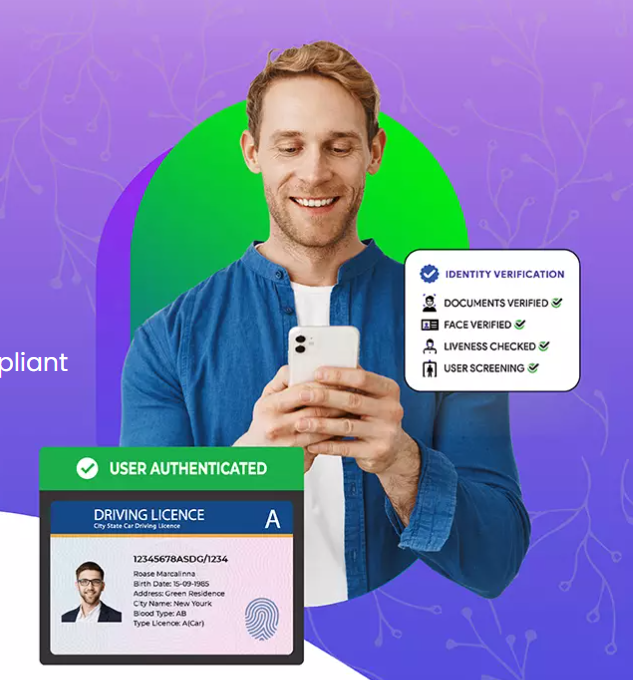
In today’s digital-first world, online identity verification has become a cornerstone of secure interactions. From online banking to digital onboarding and remote KYC (Know Your Customer) processes, verifying a person’s identity digitally ensures trust, safety, and compliance. Among the many technologies reshaping identity verification, NFC identification has emerged as one of the most reliable and efficient methods. It provides real-time, contactless verification that enhances user experience while maintaining stringent security standards.
This blog explores how online identity verification works, what NFC identification is, and how their integration is transforming digital authentication globally.
Understanding Online Identity Verification
Online identity verification is the process of confirming that a person’s claimed identity is genuine. It ensures that the user accessing a digital service is who they say they are. This is typically achieved through multiple layers of verification, including:
- Document verification – Scanning and validating identity documents such as passports, driver’s licenses, or ID cards.
- Facial recognition – Comparing a live selfie with the photo on an ID document to confirm liveness and authenticity.
- Biometric verification – Using fingerprint, iris, or voice patterns for identity confirmation.
- Liveness detection – Ensuring that the user is a real person and not a spoof or photo.
The goal of online identity verification is to prevent fraud, money laundering, and unauthorized access while simplifying digital onboarding for genuine users.
What Is NFC Identification?
NFC (Near Field Communication) is a short-range wireless technology that enables two devices to exchange data when they are close together. Most modern ID cards, passports, and smartphones are equipped with NFC chips that securely store identity data.
In the context of identity verification, NFC identification allows systems to read data directly from an NFC-enabled ID document. For example, when a user taps their ePassport or National ID card against their smartphone, the system extracts and validates the encrypted data in real time.
This process is much faster and more secure than traditional document scanning, as NFC chips store tamper-proof, digitally signed information that cannot be easily forged.
How Online Identity Verification Works with NFC Identification
Integrating NFC technology into online identity verification enhances both the security and user experience. Here’s how the process typically works:
- User Onboarding: The user starts by selecting the digital onboarding or KYC verification option on an app or website.
- Document Scanning: Instead of capturing an image of their ID, the user is prompted to tap their NFC-enabled ID card or passport against their smartphone.
- Data Extraction: The NFC reader securely extracts personal data like name, date of birth, and ID number from the embedded chip.
- Authenticity Check: The system validates the digital signatures and cryptographic data within the chip to confirm authenticity.
- Face Match & Liveness Check: The user then takes a selfie. Advanced AI-powered systems perform facial recognition and liveness detection to ensure the individual matches the ID photo and is physically present.
- Verification Completion: Once all steps are validated, the user’s identity is securely verified in seconds.
This seamless process eliminates manual errors, reduces onboarding time, and ensures compliance with KYC and AML (Anti-Money Laundering) regulations.
Benefits of Online Identity Verification Using NFC
1. Enhanced Security
NFC-based identity verification ensures a higher level of security. Since the data stored on NFC chips is encrypted and digitally signed by the issuing authority, it’s nearly impossible to forge or tamper with. This protects both businesses and users from identity theft and fraud.
2. Faster Verification
Unlike manual document uploads, NFC identification speeds up the verification process. Users can complete onboarding within seconds, providing a smoother customer experience while maintaining accuracy.
3. Contactless and Convenient
In the post-pandemic era, contactless verification has become a priority. NFC technology allows users to verify their identity without handing over physical documents, ensuring hygiene and convenience.
4. Compliance with Global Standards
NFC-enabled ePassports and ID cards comply with ICAO (International Civil Aviation Organization) standards. This ensures global interoperability and makes NFC-based verification suitable for international applications like cross-border banking and remote onboarding.
5. Reduced Fraud and Manual Errors
Traditional identity verification methods that rely on manual inspection can be prone to errors. NFC eliminates such risks by automating the process and verifying data cryptographically.
Applications of NFC in Online Identity Verification
The use of NFC identification is rapidly expanding across multiple sectors:
- Banking and Finance: Streamlines KYC verification for opening new accounts or accessing online banking services.
- Telecommunication: Enables SIM registration and customer onboarding in a secure and contactless manner.
- Travel and Immigration: Facilitates e-passport verification and border control with minimal human intervention.
- Healthcare: Verifies patient identity and secures medical data access.
- E-Government Services: Allows citizens to access digital services securely using NFC-enabled ID cards.
NFC Identification and Biometric Integration
Combining NFC identification with biometric verification creates an even more robust identity authentication process. While NFC confirms the authenticity of the document, biometrics verify the person’s physical presence. This dual-layer verification prevents spoofing attempts and ensures that the individual presenting the ID is the rightful owner.
For example, during remote KYC, a user’s NFC chip data can be matched with their live selfie or fingerprint scan. This synergy of technologies makes the verification process foolproof and fully automated.
The Future of Online Identity Verification
The future of digital identity verification lies in AI-driven automation and contactless technologies. With NFC, AI, and biometric innovations, organizations can achieve seamless, real-time verification that balances security with convenience.
Governments and regulatory authorities are also recognizing the potential of NFC-enabled digital identity. Many countries are rolling out electronic ID programs and promoting interoperability among banks, telecoms, and fintech platforms to simplify identity management.
Furthermore, as cyber threats evolve, the combination of NFC identification, AI-powered analytics, and blockchain-based data storage will redefine trust in digital ecosystems.
Conclusion
The integration of online identity verification and NFC identification is transforming the way individuals prove their identity in the digital world. By leveraging secure, contactless, and automated technologies, businesses can not only improve user experience but also strengthen compliance and reduce fraud.
As more industries adopt NFC and biometric verification, the future of digital identity authentication looks faster, smarter, and more secure than ever before.