
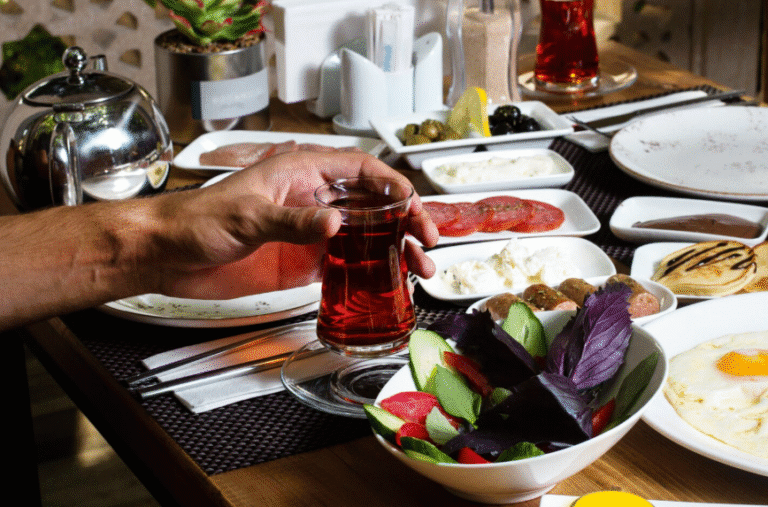
Turkish hospitality is one of the most admired cultural qualities in the world—so legendary that there’s a famous saying in Türkiye: “A guest is a gift from God.” This simple yet profound belief shapes how people welcome visitors, how meals are served, and how food becomes a meaningful expression of love, respect, and connection.
Behind every plate of Turkish food lies a story: centuries of culinary influence, traditions passed from one generation to another, and a deeply rooted culture of treating guests with generosity. Turkish hospitality and food culture are not accidental; they are intentional, heartfelt practices woven into the fabric of daily life.
Hospitality as a Cultural Identity
In Türkiye, hospitality is not merely good manners—it is a cultural identity. From the moment a guest steps into a home, they are treated with genuine care. Shoes are exchanged for slippers, tea is always offered, and hosts will go above and beyond to ensure guests feel both welcome and valued.
This mindset extends beyond private homes. Whether you enter a small village bakery or a grand restaurant, you’ll often hear the familiar greeting: “Hoş geldiniz,” meaning “Welcome—your presence brings joy.” This phrase reflects the essence of Turkish hospitality: an atmosphere where strangers become friends, and friends become family.
Tea: A Universal Symbol of Welcome
If Turkish hospitality had a symbol, it would undoubtedly be çay—traditional black tea served in tulip-shaped glasses. Offering tea is considered an act of warmth and goodwill. It doesn’t matter whether someone is visiting for five minutes or five hours, tea will always be served.
But tea in Türkiye is not simply a drink; it is a ritual. It slows down the moment, encourages conversation, and strengthens social bonds. Sharing tea is sharing time, and sharing time is sharing care.
Food: A Heartfelt Extension of Hospitality
Food is the soul of Turkish hospitality. Meals are not rushed, and food is never stingy. You’ll often hear phrases like “Eat, please! Have more!” because abundance is a sign of love. Serving food generously is a way of saying, “You matter to us.”
Turkish cuisine blends influences from Central Asia, the Middle East, the Balkans, and the Mediterranean. These diverse culinary elements have created a rich tapestry of dishes ranging from meze (small appetisers) to kebabs, pide, dolma, and countless desserts like baklava and künefe.
What makes Turkish food culture special is the focus on sharing. Large platters, shared plates, and communal feasting create a sense of unity. Dining is never just about eating—it is about connecting.
Tradition Meets Modernity in Turkish Eating Culture
Although Türkiye embraces modern dining trends, many traditional practices remain deeply respected. Bread, for instance, is considered sacred. In many households, even a crumb of bread is never wasted. Meals often begin with a simple offering of bread and olives or cheese, symbolising gratitude for the essentials of life.
Sitting at a Turkish table also means embracing a slow dining experience. Conversations stretch long after the meal ends, and dessert is followed by tea or Turkish coffee—the perfect ending to an unhurried gathering.
Street Food: Everyday Hospitality in Motion
Turkish hospitality is also visible in its vibrant street-food culture. Vendors selling simit (sesame bread rings), döner, kokoreç, boza, roasted chestnuts, and midye dolma (stuffed mussels) create an atmosphere of warmth and accessibility.
Street vendors are often ready with a smile, a quick story, or even an unsolicited discount for a friendly customer. This informal hospitality shows that Turkish warmth is not limited to homes and restaurants—it’s everywhere.
Restaurants as Cultural Ambassadors
Turkish restaurants around the world play a powerful role in preserving and sharing this cultural essence. They serve as ambassadors, introducing people to the warmth, authenticity, and generosity that define Turkish dining. One such example is the beloved sofra restaurant , a place where traditional Turkish hospitality comes alive through every detail—from the warm welcome to the carefully prepared dishes. At Sofra, meals are cooked with the same passion found in Turkish homes, reflecting the heritage of family recipes and regional flavours. The inviting atmosphere, flavour-rich dishes, and attentive service make it a standout example of how Turkish food culture continues to flourish beyond Türkiye’s borders.
The Emotional Connection to Food
What makes Turkish food culture so memorable is the emotional experience it creates. Meals are rarely eaten alone. Food brings people together for celebrations, holidays, family gatherings, and even moments of healing.
Because food carries meaning, Turkish people take pride in preparing it with care. Whether it’s stuffing grape leaves, kneading dough for börek, or marinating meats overnight, the process itself is a labour of love.
Preserving a Timeless Tradition
As Turkish cuisine gains global popularity, its values remain unchanged. Hospitality, generosity, and connection are still at the heart of every Turkish dining experience. Modern restaurants, including overseas establishments like Sofra, play a vital role in keeping these traditions alive and introducing them to new audiences.
Conclusion
The secret behind Turkish hospitality and food culture lies in its sincerity. It is not about fancy presentations or extravagant gestures—it’s about warmth, connection, and making sure every guest leaves with a full heart and a full stomach.
In Türkiye, and in Turkish restaurants around the world, food is more than nourishment—it is a celebration of life. And that is what makes Turkish hospitality truly unforgettable.