
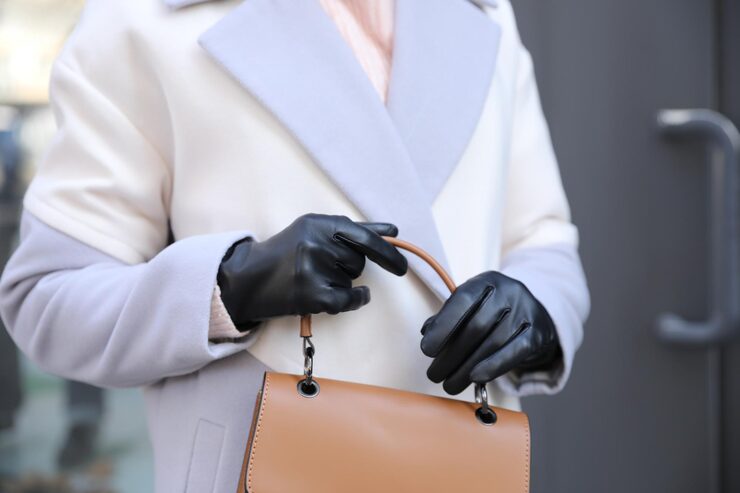
The global resale market for high-end designer goods has reached unprecedented heights in 2026, transforming luxury handbags into legitimate investment assets similar to fine art or gold. However, with the rise in value comes a sophisticated threat: “Triple-A” replicas that are designed to deceive even the most experienced collectors. In this high-stakes environment, professional bag authentication has evolved from a simple hobbyist’s check into a rigorous forensic discipline. Whether you are purchasing a pre-loved Birkin from an online marketplace or a vintage Chanel from a private seller, the necessity of a guaranteed verification process cannot be overstated. Today, the industry relies on a combination of generational craftsmanship knowledge and cutting-edge optical technology to ensure that every stitch, stamp, and scent aligns with the rigorous standards of the world’s most iconic fashion houses.
The Technological Frontier: AI and Material Analysis
In 2026, the primary defense against high-quality counterfeits is “Optical Material Analysis.” This technology uses microscopic lenses connected to vast databases of authentic brand DNA. Every luxury brand uses specific proprietary tanning processes and thread types that leave a “Microscopic Fingerprint.”
When a specialist performs a bag authentication, they are no longer just looking at the bag’s overall shape. They are scanning the leather’s cellular structure and the metallic composition of the hardware. If the alloy used in a zipper doesn’t match the exact metallurgical profile used by the brand in a specific year, the bag is instantly flagged. This data-driven approach removes human bias and provides a 99.9% accuracy rate, making it the gold standard for high-value transactions in the modern era.
Forensic Markers: The Details That Matter
To understand how authentication works in 2026, one must look at the specific markers that counterfeiters struggle to replicate perfectly.
1. The Geometry of the Heat Stamp
The “Heat Stamp” is the brand’s signature, usually embossed in gold, silver, or as a colorless press. Authenticators look for the precise depth of the stamp and the “kerning” (the space between letters). In 2026, neural networks are used to compare these stamps against historical archives. Even a fraction of a millimeter difference in the thickness of a letter can reveal a fake. Genuine stamps are clean, crisp, and perfectly balanced, whereas fakes often show “bleeding” of the foil or inconsistent depth.
2. The Weight of Gravity: Hardware and Zippers
Luxury hardware is typically made of solid brass, stainless steel, or even precious metals like 24K gold or palladium plating. The weight is a huge giveaway. Authenticators use precision scales to measure the hardware. A genuine Hermès lock, for example, has a very specific weight and a distinct “thud” when it hits a surface. Counterfeiters often use hollowed-out alloys or “flash-plating” that feels light or sounds “tinny.” Furthermore, the movement of the zipper (the “teeth”) must be buttery smooth, a result of hand-polishing that mass-production factories simply cannot afford to do.
3. The Olfactory Profile: The Scent of Luxury
One of the most underrated aspects of verification is the “Scent Test.” Authentic luxury leather has a rich, earthy, and organic smell due to the vegetable tanning and natural oils used in European tanneries. Counterfeit bags, produced in environments with less regulation, often carry a faint chemical, “glue-like,” or plastic odor. In 2026, some high-end authentication labs even use “Electronic Noses” to detect the chemical off-gassing of synthetic materials used in fake bags.
The Rise of the Digital Product Passport (DPP)
A revolutionary change in 2026 is the widespread implementation of Digital Product Passports. Most bags produced after 2023 now contain an encrypted NFC chip hidden within the leather layers. This chip is linked to a private blockchain ledger that records every detail of the bag’s creation and sale. For older vintage pieces that lack this technology, authenticators now issue “Retro-Digital Certificates.” Once a vintage bag is verified, it is given a unique digital ID that stays with it forever, making future resales much faster and more secure. This digital ecosystem is finally bringing transparency to a market that was once riddled with uncertainty.
Psychological Factors: Why “Super-Fakes” Exist
The psychology of the 2026 buyer is complex. While “Super-Fakes” have become more accessible, the desire for “Authentic Energy” remains the driving force of the luxury market. Collectors understand that a fake bag carries no historical value and no investment potential. By investing in professional verification, a buyer is not just protecting their money; they are protecting the integrity of the art form. The satisfaction of owning a genuine piece of fashion history is something that a replica, no matter how well-made, can never provide.
Conclusion: Protecting the Heritage of Craftsmanship
As the luxury landscape continues to evolve, the tools used to verify authenticity will only become more advanced. The battle between counterfeiters and authenticators is a constant game of cat and mouse, but in 2026, the advantage is firmly with the experts. By combining traditional artisanal knowledge with AI, blockchain, and forensic science, we have created a safety net for collectors worldwide. When you prioritize professional verification, you are doing more than just checking a label; you are honoring the hundreds of hours of labor that go into every genuine designer piece. In a world of fast fashion and disposable goods, the authenticated luxury bag stands as a beacon of quality, tradition, and enduring value.