
Have you ever looked at a tattoo and thought, “What was I thinking?” Maybe it’s an ex’s name that now makes you cringe, or perhaps that trendy design from ten years ago just doesn’t suit who you’ve become. You’re certainly not alone—thousands of Australians find themselves wanting a fresh start every year.
The good news? Modern tattoo removal has come incredibly far. But here’s the thing: not all removal methods are created equal. While the internet is packed with DIY remedies and at-home gadgets promising quick fixes, professional laser tattoo removal consistently delivers superior results. The difference between a botched attempt and beautifully clear skin often comes down to one crucial factor—expertise.
In this article, we’ll explore exactly how tattoo removal works, break down the different laser types available, and explain why professional treatment outperforms DIY approaches every time. You’ll discover what realistic results look like after your first few sessions, learn how your skin heals post-treatment, and understand what to look for when choosing a clinic. Whether you’re dealing with stubborn black ink, tricky blue pigments, or dark tattoo removal challenges, this guide has you covered.
How Does Tattoo Removal Actually Work?
The Science Behind Laser Tattoo Removal:
So, how does a tattoo removal work exactly? It’s actually quite fascinating science. When you got your tattoo, ink particles were deposited deep into your dermis—the second layer of skin. These particles are too large for your immune system to naturally flush away, which is why tattoos are permanent.
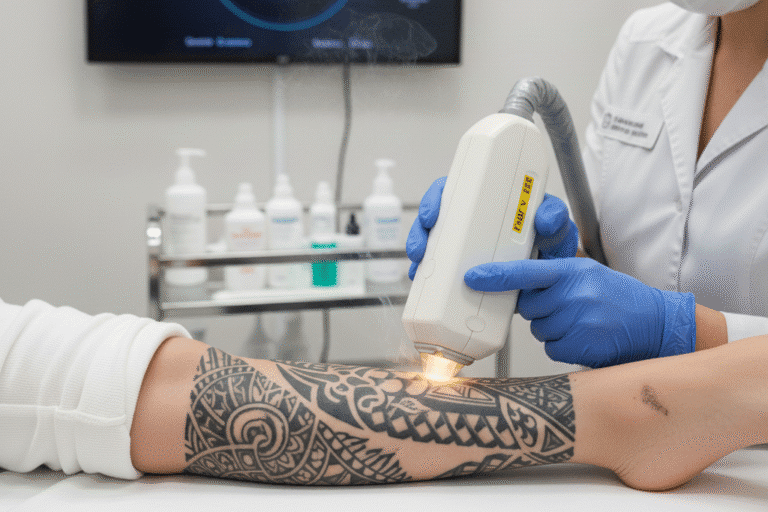
Laser tattoo removal works by targeting these ink particles with highly concentrated light energy. The laser emits pulses that pass through your outer skin layer without damaging it, then selectively heat and shatter the ink beneath. Think of it like breaking a boulder into pebbles—suddenly, those particles become small enough for your body to process.
How Tattoos Are Removed: Breaking Down the Ink Particles?
Different ink colours absorb different wavelengths of light. This is precisely why professional clinics use multiple laser types—what works brilliantly for black ink might be useless against blue or green pigments. Professional practitioners understand these nuances and adjust their approach accordingly.
The laser pulses last just billionths of a second, delivering enough energy to fracture the ink while protecting surrounding tissue. It’s incredibly precise work that requires both advanced technology and skilled hands.
Why Your Body Does the Heavy Lifting?
Here’s something that surprises many people: the laser doesn’t actually remove the ink directly. Instead, it breaks particles into tiny fragments that your lymphatic system then carries away naturally. Your white blood cells essentially “eat” these smaller particles and flush them through your body over the following weeks.
This is why tattoo removal takes multiple sessions spaced several weeks apart. Your body needs time to clear away the shattered ink before the next treatment can target deeper or remaining particles. It’s a partnership between technology and your own healing processes.
.png)
Tattoo Removal Laser Types: Understanding Your Options:
What Is the Best Laser for Black Tattoo Removal?
Black ink is actually the easiest colour to remove because it absorbs all light wavelengths effectively. The best laser for black tattoo removal is typically a Q-switched Nd:YAG laser operating at 1064nm wavelength. This penetrates deeply and works exceptionally well on darker pigments.
Professional clinics often achieve excellent results on black tattoos, sometimes requiring fewer sessions than coloured pieces. However, even with “easy” black ink, the skill of your practitioner significantly impacts outcomes.
Blue Tattoo Removal: Why Laser Tattoo Removal Blue Ink Requires Specific Technology
Blue tattoo removal presents unique challenges. Tattoo removal blue ink responds best to specific wavelengths—typically 694nm or 755nm light from Ruby or Alexandrite lasers. Using the wrong wavelength simply won’t break down blue pigments effectively.
This is where professional expertise becomes crucial. A clinic with multiple laser types can switch between technologies during your treatment, targeting each colour appropriately. Laser tattoo removal blue ink really does require this specialised approach.
Dark Tattoo Removal: Tackling Stubborn Pigments
Dark tattoo removal—whether black, navy, or deep purple—generally responds well to treatment. However, older tattoos that have faded can sometimes be trickier because the ink has spread and diffused over time.
Professional practitioners assess your specific tattoo’s age, depth, and colour composition before recommending a treatment plan. This personalised approach delivers far better results than one-size-fits-all methods.
Q-Switched vs. Picosecond Lasers: Which Delivers Better Results?
Q-switched lasers have been the gold standard for years, delivering pulses in nanoseconds. Picosecond lasers are newer, delivering even shorter pulses measured in trillionths of a second. These ultra-short pulses can shatter ink more efficiently, potentially meaning fewer sessions.
Both tattoo removal lasers have their place in professional clinics. Picosecond technology often excels with stubborn colours, while Q-switched remains highly effective for most tattoos. The best clinics offer both options.
Professional vs. DIY: Why Tattoo Removal Methods Matter
Comparing Tattoo Removal Techniques:
When exploring how can you remove a tattoo, you’ll find numerous tattoo removal methods available. Professional options include laser removal, surgical excision, and dermabrasion. At-home options range from creams to DIY chemical peels.
The reality? Only professional laser surgery for tattoos consistently delivers safe, effective results. Other tattoo removal techniques either don’t work or carry significant risks.
The Risks of At-Home Removal Attempts:
Those miracle removal creams you’ve seen advertised? They simply cannot penetrate deep enough to affect tattoo ink. At best, they’re a waste of money. At worst, they cause chemical burns and scarring.
DIY acid peels and abrasive methods are even more dangerous. People have caused permanent scarring, infections, and skin damage trying to take off a tattoo at home. It’s genuinely not worth the risk.
Why Laser Surgery for Tattoos Requires Expert Hands?
Professional practitioners spend years training to understand skin types, laser physics, and healing processes. They know precisely what settings to use, how to recognise complications, and how to adjust treatment for optimal outcomes.
How do I remove a tattoo safely? The answer is always: find a qualified professional. The investment in proper treatment protects both your health and your results.
What to Expect: Tattoo Removal Results Timeline
Laser Tattoo Removal Results After First Treatment:
Managing expectations is essential. Laser tattoo removal results after first treatment are typically subtle—you might notice slight fading or “ghosting” of the design. Some people see more dramatic changes, while others notice minimal difference initially.
This is completely normal. Your body needs weeks to flush away the shattered ink particles. The real progress often becomes visible between sessions.
Laser Tattoo Removal After 2 Sessions: Realistic Progress
By your second or third appointment, laser tattoo removal after 2 sessions usually shows noticeable fading. Black inks often respond fastest, with significant lightening visible relatively early in treatment.
Taking progress photos between sessions helps you appreciate the gradual improvement. Tattoo removal after each session builds on previous work, steadily breaking down remaining ink.
How Many Sessions for Tattoo Removal Best Results?
For tattoo removal best results, most people need between 6-12 sessions, sometimes more. Factors affecting this include:
- Ink colours and types
- Tattoo age and depth
- Your skin type
- Your immune system health
- Tattoo location on your body
Professional clinics provide realistic session estimates during consultations, helping you plan accordingly.
.png)
How Does Skin Look After Tattoo Removal?
The Healing Process Explained
Wondering how skin looks after tattoo removal? Immediately after treatment, expect redness, swelling, and possibly blistering—similar to a sunburn. This typically settles within a week or two.
Between sessions, your skin continues healing while your body processes the shattered ink. Most people can return to normal activities quickly, following simple aftercare instructions.
Tattoo and Scar Removal: Can Professional Treatment Minimise Scarring?
Here’s where professional treatment truly shines. Skilled practitioners minimise scarring by using appropriate settings, spacing sessions correctly, and monitoring your skin’s response throughout treatment.
Tattoo and scar removal outcomes are significantly better when professionals manage your care. They can adjust technique if your skin shows signs of stress, preventing permanent damage.
Removed Tattoo Scar: What Affects Your Skin’s Recovery?
A removed tattoo scar is more likely if treatment is too aggressive, sessions are too close together, or aftercare is neglected. Your skin type, genetics, and overall health also play roles.
Professional clinics prioritise your skin’s health alongside removing the tattoo. This balanced approach delivers the clearest results with minimal scarring.
Is Quick Tattoo Removal Really Possible?
Factors That Speed Up or Slow Down Results:
Quick tattoo removal is everyone’s dream, but several factors influence your timeline. Smaller, older tattoos with black ink fade fastest. Larger, newer, or colourful pieces take longer.
Your lifestyle matters too—good circulation, healthy eating, and not smoking all support your body’s ability to process broken-down ink efficiently.
Setting Realistic Expectations for Your Journey:
While you might wish for instant results, rushing tattoo removal causes problems. Sessions spaced 6-8 weeks apart allow proper healing and optimal fading. Patience truly delivers better outcomes.
Trust the process, follow your practitioner’s advice, and celebrate each session’s progress.
Finding the Best Laser Tattoo Removal in Melbourne (and Beyond) :
What to Look for in a Professional Clinic?
Searching for best laser tattoo removal Melbourne or anywhere in Australia? Look for clinics with:
- Qualified, experienced practitioners
- Multiple laser types for different colours
- Transparent pricing and realistic expectations
- Positive reviews and before/after galleries
- Thorough consultations before treatment
Questions to Ask Before Your First Appointment:
Ask about their experience with your specific tattoo type, what results you can realistically expect, and how many sessions they estimate. Enquire about their aftercare support and what happens if complications arise.
A reputable clinic welcomes questions and provides clear, honest answers.
.png)
Investing in Professional Care for Lasting Results:
Removing a tattoo is a journey that demands patience, proper technology, and skilled hands. While DIY methods might seem tempting, they simply cannot match the safety and effectiveness of professional laser treatment.
Professional clinics offer advanced tattoo removal lasers, personalised treatment plans, and the expertise to navigate challenges like stubborn blue ink or sensitive skin. They protect you from scarring while delivering the clearest possible results.
Your skin deserves proper care. Whether you’re in Melbourne or anywhere across Australia, finding a qualified professional is the smartest investment you can make. That unwanted tattoo doesn’t have to be permanent—with the right help, you can genuinely start fresh.