
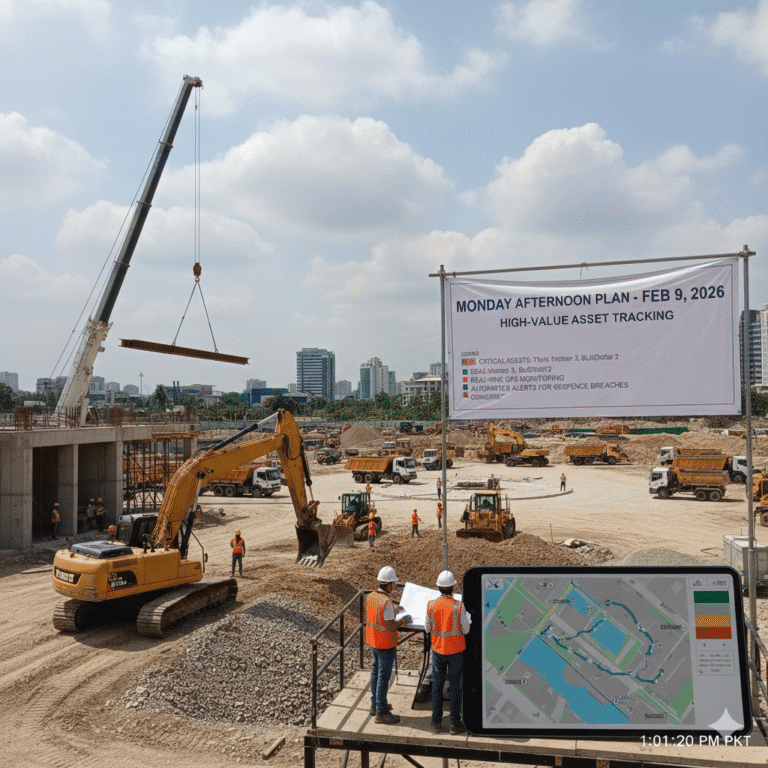
High value assets sit at the heart of construction productivity. From specialized attachments and generators to survey equipment, trailers, and tooling, these assets move constantly between jobsites, yards, and service areas. They are expensive to replace, critical to schedules, and often small enough to disappear without notice. The challenge is clear: assets must be tracked accurately without adding friction for crews already under pressure. When construction asset tracking software is implemented correctly, visibility improves without slowing work in the field.
This article explains how asset tracking supports daily operations, why traditional methods fail, and how modern systems deliver control without creating extra steps for crews, supervisors, or managers.
Why High Value Assets Create Daily Risk
High value assets rarely stay in one place. They move with crews, shift between projects, and often change hands multiple times in a week. Unlike large machines, these assets are easy to overlook and difficult to recover once lost.
Daily risk emerges when location and responsibility are unclear. Crews waste time searching. Supervisors approve replacements too quickly. Projects stall while equipment is located or substituted. These delays feel small in isolation but add up across weeks and months.
Asset tracking exists to reduce this risk, but only if it works in the background rather than becoming another task crews must manage.
Why Manual Tracking Slows Everyone Down
Many organizations attempt to track assets through spreadsheets, sign out sheets, or verbal updates. These methods rely heavily on memory and discipline, which break down under real jobsite conditions.
Manual tracking often leads to:
- Assets moved without updates
- Logs filled out after the fact or not at all
- Conflicting records across teams
- Time spent verifying information instead of working
The result is a false sense of control. Data exists, but it is outdated or incomplete, forcing teams to double check everything anyway. Crews feel burdened, and managers still lack confidence.
Asset Visibility Should Not Depend on Crew Behavior
One of the biggest mistakes in asset tracking is placing responsibility entirely on the field. When tracking requires constant scanning, manual check ins, or paperwork, it competes with production.
Effective construction asset tracking software removes this dependency. Location updates happen automatically. Status changes are captured passively. Crews focus on work, not administration.
Tracking succeeds when it supports crews instead of interrupting them.
Centralized Asset Data Reduces Coordination Noise
When asset data lives in one place, coordination improves immediately. Supervisors stop calling multiple people to locate equipment. Yard managers know what is on hand. Project teams see availability without waiting for updates.
Centralization delivers practical benefits:
- Faster confirmation of asset location
- Fewer interruptions to field teams
- Clear ownership and assignment history
This shared visibility reduces friction across roles and keeps work moving.
Tracking Does Not Have to Mean Micromanagement
Field resistance to tracking often comes from fear of micromanagement. Crews worry that tracking will be used to monitor behavior rather than support work.
When implemented correctly, asset tracking focuses on assets, not people. The goal is to understand where equipment is and whether it is available, not how individuals are spending their time.
Clear communication about purpose matters. Tracking is about reducing delays, not increasing oversight. When crews see that tracking eliminates last minute scrambles, adoption improves naturally.
High Value Assets Require Different Tracking Than Heavy Equipment
Large machines are easy to spot and harder to lose. High value assets require a different approach.
These assets often include:
- Attachments and specialized tools
- Portable power equipment
- Survey and layout gear
- Trailers and temporary systems
Because they move frequently and lack onboard telematics, passive tracking methods are essential. Asset tracking software fills this gap by maintaining visibility without relying on constant user input.
Location Awareness Improves Daily Planning
Knowing where high value assets are located improves daily planning across the jobsite. Crews start work faster when required tools are confirmed. Supervisors avoid delays by verifying availability before tasks begin.
Location awareness supports:
- Better sequencing of work
- Fewer mid shift disruptions
- Reduced reliance on substitutions
Small planning improvements compound into meaningful productivity gains.
Loss Prevention Without Added Friction
Theft and loss remain major concerns for high value assets. Traditional prevention methods often involve locks, cages, and restricted access, which can slow work.
Asset tracking adds a different layer of protection. Visibility discourages misuse. Missing assets are identified quickly. Recovery chances improve because last known locations are clear.
Importantly, this protection happens without adding steps to daily workflows.
Accountability Becomes Clear and Fair
When asset movement is tracked centrally, accountability improves without confrontation. Instead of relying on memory, teams can review assignment history and movement timelines.
This clarity helps resolve issues objectively. Assets are not blamed on individuals without context. Responsibility is defined by data, not assumptions.
Fair accountability builds trust and reduces conflict between teams.
Yard Operations Become More Efficient
Yards often become bottlenecks for asset visibility. Equipment arrives, sits, and leaves without consistent updates.
Centralized asset tracking improves yard operations by showing what is on hand, what is assigned, and what is available. Yard managers plan staging more effectively. Assets spend less time idle because availability is visible.
The yard becomes an active part of planning rather than a blind spot.
Tracking Supports Maintenance Without Extra Work
High value assets still require inspection, calibration, and service. When tracking data connects with maintenance records, planning improves.
Maintenance teams know where assets are and when they will be accessible. Service can be scheduled without disrupting jobs. Missed inspections decrease because assets are not forgotten.
This coordination happens quietly, without adding tasks for crews.
Scaling Asset Tracking Without Complexity
As organizations grow, asset counts rise quickly. Manual methods fail at scale because they depend on individual effort.
Centralized asset tracking scales naturally. New assets are added once and tracked consistently. New projects plug into the same system. Visibility remains intact as operations expand.
Growth does not introduce chaos because tracking is systemic rather than manual.
Reducing Rental Dependency Through Better Visibility
Unnecessary rentals often stem from poor asset visibility. When teams cannot confirm availability quickly, renting feels safer than searching.
Accurate asset tracking changes this behavior. Teams identify idle or nearby assets and redeploy them. Rental approvals decrease because decisions are informed.
Over time, rental spend drops without sacrificing productivity.
Field Adoption Improves When Tracking Is Invisible
The most successful asset tracking systems are the least noticeable to crews. When updates happen automatically and information is accessible without effort, resistance disappears.
Crews adopt systems that help them avoid delays. When tracking prevents wasted time and last minute issues, it becomes an ally rather than a burden.
Invisible support drives real adoption.
Strategic Value Beyond Daily Operations
Over time, asset tracking delivers value beyond daily coordination. Leadership gains insight into asset utilization, replacement planning, and capital allocation.
Patterns emerge around usage, loss, and downtime. Decisions become evidence based rather than reactive. High value assets are treated as managed resources rather than uncontrolled inventory.
This strategic clarity strengthens long term performance.
Conclusion
Tracking high value assets does not have to slow crews or complicate operations. When construction asset tracking software is implemented with minimal friction, visibility improves while productivity stays intact.
Crews spend less time searching. Supervisors plan with confidence. Rentals decrease. Losses are identified quickly. Accountability becomes fair and objective.
Asset tracking succeeds when it works quietly in the background, supporting decisions without interrupting work. When high value assets are visible without added effort, teams stop reacting to problems and start managing with control and clarity.