
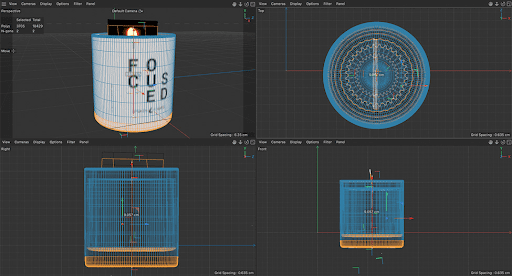
For years, product photography has been the standard method for showcasing items in catalogs, brochures, and online stores. Professional cameras, studio lighting, and edited images helped brands present products in the best possible way. However, as digital expectations grow, many businesses are now comparing traditional photography with professional 3d modeling services to decide which approach delivers better long-term value.
The answer depends on business goals, scalability needs, and marketing strategy. While photography still has its place, 3D visualization is changing how brands present and promote their products.
The Limitations of Traditional Product Photography
Product photography requires physical inventory. Before a photoshoot begins, companies must produce a final sample, ship it to a studio, arrange lighting setups, and hire photographers. If the product has multiple variations — such as colors, sizes, or materials — each version often needs to be photographed separately.
This process increases time and cost. If any design changes occur later, the entire shoot may need to be repeated. For fast-moving industries, this can slow down product launches and marketing campaigns.
Photography also limits flexibility. Once an image is captured, altering angles or lighting significantly may require another session.
The Flexibility of 3D Modeling Services
In contrast, 3d modeling services offer flexibility from the beginning. A digital model can be created based on design files, sketches, or technical drawings, even before the physical product is manufactured. This allows brands to start marketing earlier.
Once the 3D model is ready, unlimited renders can be generated. Different camera angles, lighting styles, backgrounds, and product variations can be created without repeating production work. Adjustments such as color changes or surface finishes can be done digitally within hours.
This adaptability is especially valuable for eCommerce brands that frequently update their product lines.
Cost Comparison Over Time
At first glance, photography may seem more affordable, especially for a single product with no variations. However, over time, repeated shoots, studio rentals, logistics, and editing costs add up.
With professional 3d product modeling services, the initial investment may be slightly higher, but the long-term savings become clear. One digital asset can be reused for website banners, advertisements, animations, social media campaigns, and even augmented reality applications.
The ability to repurpose the same model across platforms increases return on investment significantly.
Realism and Visual Quality
Modern rendering technology has advanced to the point where high-quality 3D visuals can look almost identical to real photographs. Accurate textures, realistic lighting, and precise material reflections make digital renders highly convincing.
While photography captures real-world details naturally, 3d modeling services allow for complete control over every visual element. Imperfections can be removed, lighting can be perfected, and environments can be customized without physical limitations.
For brands that want complete creative control, 3D often provides greater consistency.
Supporting Future Technologies
One of the biggest advantages of 3d product modeling services is compatibility with emerging digital trends. Interactive product viewers, 360-degree rotations, and augmented reality experiences all require 3D assets. Traditional photographs cannot support these features.
As online shopping becomes more immersive, brands that already have strong 3D foundations will be better positioned to adopt new technologies quickly.
When Photography Still Makes Sense
Despite the growth of 3D, photography still works well for certain industries. Fashion brands often rely on real models and natural fabric movement, which can be challenging to replicate perfectly in 3D. Handmade or artistic products may also benefit from authentic photographic presentation.
In many cases, businesses use a hybrid approach — combining photography for lifestyle shots and 3d modeling services for clean product renders and technical views.
Choosing the Right Strategy for Your Brand
The decision between photography and 3d product modeling services should align with business goals, product type, and marketing plans. Brands focused on scalability, customization, and digital innovation often benefit more from 3D solutions.
For companies exploring modern visual strategies, it-s provides professional 3D services designed to meet evolving market demands while maintaining high visual standards.
Final Thoughts
Traditional product photography built the foundation of visual marketing, but digital transformation is reshaping expectations. Professional 3d modeling services offer flexibility, scalability, and long-term cost efficiency that photography alone cannot match.At the same time, advanced 3d product modeling services prepare brands for interactive commerce, immersive marketing, and future-ready digital experiences.