
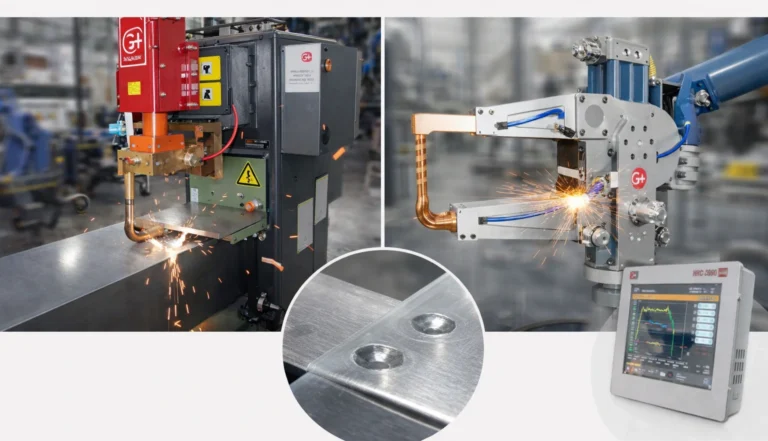
In modern manufacturing, aluminium has emerged as a material of choice for automotive, aerospace, electronics, and appliance industries due to its light weight, corrosion resistance, and excellent strength-to-weight ratio. However, joining aluminium presents unique challenges, particularly in resistance spot welding. Understanding how to effectively spot weld aluminium is critical for engineers, OEMs, and production managers seeking high-quality, repeatable results.
Heron Welder, a global leader in industrial welding and metal-joining solutions, offers advanced spot welding machines, automated systems, and accessories designed specifically for aluminium fabrication.
Understanding Spot Welding Aluminium
Resistance spot welding (RSW) is a process where two metal sheets are joined by applying pressure and passing a high electric current through the contact point. The resistance of the metal generates heat, which melts the material and forms a weld nugget as it cools under pressure.
Aluminium presents unique challenges compared to steel:
- High thermal conductivity – Aluminium dissipates heat quickly, requiring higher current and precise timing.
- Oxide layer formation – Aluminium naturally forms an oxide layer that increases electrical resistance at the surface.
- Softness and ductility – Excessive electrode force can deform sheets or cause spatter.
To overcome these issues, specialised equipment and process controls are essential. Heron’s resistance welding machines, including MFDC spot welders and capacitor discharge systems, provide precise current, force, and timing adjustments to achieve strong, consistent welds.
Applications of Aluminium Spot Welding
Aluminium spot welding is widely used across industries where lightweight and high-strength assemblies are critical:
Automotive Industry
- Battery enclosures for electric vehicles
- Lightweight body panels
- Heat exchangers and HVAC components
Aerospace & Aviation
- Aircraft fuselage panels
- Lightweight structural assemblies
Electronics & Appliances
- Aluminium casings for consumer electronics
- Heat sinks and cooling components
- Appliance frames and panels
Industrial Fabrication
- Aluminium enclosures for machinery
- Conveyor and storage systems
Heron’s automated spot welding solutions are often integrated into production lines to increase throughput and reduce operator fatigue, ensuring precise and repeatable aluminium welds.
Comparing Spot Welding Aluminium vs. Steel
| Feature | Aluminium | Steel |
|---|---|---|
| Thermal Conductivity | High (heat dissipates quickly) | Low (heat concentrates at weld point) |
| Oxide Layer | Forms rapidly, increases resistance | Minimal impact |
| Welding Current | Higher, precise control required | Standard industrial currents |
| Electrode Wear | Faster, requires special alloys | Slower, standard electrodes |
| Weld Quality | Sensitive to timing and force | More forgiving |
While steel is easier to spot weld, aluminium requires process optimisation. Using Heron’s MFDC spot welders or capacitor discharge systems, manufacturers can maintain high-quality welds while mitigating electrode wear and material deformation.
Best Practices for Spot Welding Aluminium
To achieve reliable aluminium welds, consider these critical factors:
1. Electrode Selection
- Use electrodes with high conductivity and wear resistance.
- Capped copper or alloyed tips reduce sticking and spatter.
2. Surface Preparation
- Clean aluminium sheets to remove oxide and contaminants.
- Mechanical cleaning or chemical pre-treatment improves conductivity.
3. Correct Current & Timing
- Higher currents are often required due to aluminium’s conductivity.
- Shorter weld times prevent overheating and sheet distortion.
4. Force Control
- Apply optimal electrode pressure to avoid indentation.
- Heron’s welding guns and force-controlled systems ensure precise contact.
5. Automation & Monitoring
- Automated welding cells provide consistent weld quality.
- Real-time monitoring of current, pressure, and timing prevents defects.
By following these practices and leveraging Heron’s welding controllers and automated systems, manufacturers can achieve repeatable, high-strength aluminium welds while minimizing maintenance and downtime.
Why Choose Heron for Aluminium Spot Welding?
Heron Welder has decades of experience in resistance welding, metal joining, and factory automation solutions. Key advantages include:
- Advanced MFDC Spot Welders: Precise current control and rapid welding cycles for aluminium.
- Capacitor Discharge Welding Systems: Ideal for thin sheets and high-speed applications.
- Automated Welding Lines: Fully integrated solutions with robots, controllers, and quality monitoring.
- Expert Support: Engineering guidance for custom welding applications and OEM production lines.
Whether you’re upgrading existing lines or designing a new aluminium assembly process, Heron provides equipment, automation, and expertise to optimize production and maintain quality.
FAQs About Spot Welding Aluminium
Q1: Can aluminium be spot welded without pre-treatment?
A1: While possible, pre-cleaning to remove oxide layers improves weld quality and reduces electrode wear.
Q2: What thickness of aluminium can be spot welded effectively?
A2: Heron spot welders can handle sheets from 0.5 mm to 5 mm, depending on the machine model and welding parameters.
Q3: How does MFDC technology help in welding aluminium?
A3: MFDC provides precise current control and rapid cycles, compensating for aluminium’s high thermal conductivity.
Q4: Is automated spot welding necessary for aluminium production lines?
A4: Automation ensures consistent weld quality, higher throughput, and reduced operator fatigue, which is crucial for aluminium due to its process sensitivity.
Q5: How do I maintain electrodes for aluminium welding?
A5: Regular cleaning, proper alloy selection, and inspection prevent sticking, wear, and inconsistent welds.
Conclusion
Spot welding aluminium is a precise process that requires specialised equipment, careful preparation, and process control. By choosing Heron Welder’s MFDC and capacitor discharge systems, along with automation and expert guidance, manufacturers can achieve strong, repeatable aluminium welds across automotive, aerospace, electronics, and industrial applications.
Ready to optimize your aluminium welding process? Contact Heron Welder today to request a quote or consult our experts for customized welding and automation solutions tailored to your factory’s production needs.