
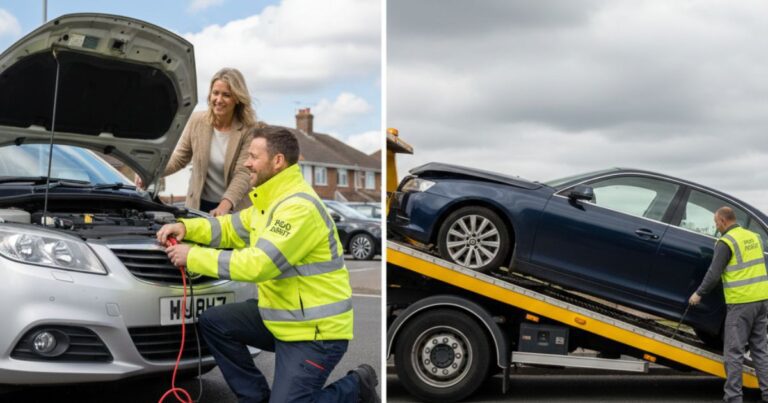
Understanding the difference between car recovery and roadside assistance can save you hours of waiting and a heap of stress when your vehicle gives up on you.
It is one of those things most drivers do not think about until they are sat on the hard shoulder with traffic rushing past. And by then, it is too late to be comparing options.
The truth is, these two terms get thrown around like they mean the same thing. They do not. One is about getting you moving again right where you stand.
The other is about transporting your car somewhere else when moving again is off the table. Knowing which one you need, and how to get it, is part of being a prepared driver in 2026.
If you are unlucky enough to be dealing with a collision rather than a simple breakdown, the situation gets more complicated. That is where professional support comes in.
A good accident management company will handle not just your vehicle’s recovery, but the entire claims process, leaving you free to focus on getting where you need to be.
Let us break down exactly what these services are, when you need each one, and how to pick the right provider before trouble finds you.
What Is Roadside Assistance in 2026?
Roadside assistance is your first line of defence against minor mishaps. You call them, a technician turns up in a van, and they try to fix the problem there and then.
The sorts of things they handle include:
- Flat batteries that need a jump-start or replacement.
- Punctured tyres that can be swapped for your spare.
- Lost keys or keys locked inside the car.
- Running out of fuel or, for electric vehicles, running out of charge.
- Minor mechanical faults that can be patched up at the roadside.
In 2026, roadside assistance has gone digital. Most providers now offer apps that track the technician’s arrival in real time. Some even offer video calls where a mechanic talks you through a simple fix while you wait. It is faster, smarter, and takes the guesswork out of what is wrong.
The key thing to remember is this: roadside assistance aims to get you back behind the wheel and on your way. If the technician cannot fix it within an hour or so, you are moving into recovery territory.
What Is Car Recovery?
Car recovery is what happens when roadside assistance cannot fix the problem. A dedicated vehicle, usually a flatbed lorry or a tow truck, arrives to transport your car to a garage, your home, or another safe location.
You need recovery when:
- The car is undrivable due to major mechanical failure.
- You have been in a collision and the vehicle is damaged.
- The car is stuck in a ditch, on soft ground, or somewhere inaccessible.
- The fault is electrical and leaves the car immobilised.
- You have an electric vehicle with a completely dead battery that cannot be charged roadside.
Modern car recovery in 2026 is more specialised than it used to be. Electric vehicles, for example, often need to be recovered using specific protocols to avoid damaging the battery or high-voltage systems. A decent recovery operator will know this. A cheap one might not.
Recovery gets you and your car out of danger and to a place where proper repairs can happen. It is not about fixing the problem. It is about moving the problem somewhere it can be fixed.
Roadside Assistance vs Car Recovery: The Key Differences
Let us lay this out plainly so there is no confusion.
| Situation | Roadside Assistance | Car Recovery |
| Flat battery | Yes, they jump-start you. | No, unless it keeps failing. |
| Punctured tyre | Yes, they fit your spare. | No, unless you have no spare. |
| Running out of fuel | Yes, they bring a can. | No, unless you are on a motorway. |
| Engine failure | They try to fix it. | If they cannot, yes. |
| Accident damage | No, too dangerous. | Yes, immediately. |
| EV flat battery | Some offer mobile charging. | Yes, if charge points are far. |
| Stuck off-road | No, they cannot recover. | Yes, they pull you out. |
The simplest way to think about it is this: if the car can be made safe to drive within a reasonable time, you need roadside assistance. If it cannot, or if it is unsafe to drive, you need recovery.
When to Call Roadside Assistance
You are sitting in a car that will not start. The dashboard lights come on, but the engine does not turn over. You pop the bonnet and see nothing obvious. What do you do?
This is a classic roadside assistance moment. The problem is probably a flat battery, a loose connection, or a faulty starter. A technician can test the battery, give you a jump, and have you on your way in twenty minutes.
Other good times to call roadside assistance include:
- You get a puncture warning and the tyre is visibly flat.
- The engine splutters and dies and you suspect you are out of diesel.
- A warning light comes on, but the car still drives normally.
- You lock your keys in the boot at a service station.
In these cases, you do not need a tow. You need a helping hand. Roadside assistance is that hand.
When Car Recovery Is the Right Call
Sometimes, the problem is bigger. You turn the key and hear a horrible grinding noise. Or worse, you have just bumped into the car in front and your front end is crumpled.
These are recovery situations.
You also need recovery if:
- The car will not go into gear or the clutch has gone.
- There is smoke coming from the engine.
- You have hit an animal and the car is leaking fluids.
- The car is flooded or has driven through deep water.
- You are driving an EV and the battery is completely dead miles from a charger.
In these cases, do not let anyone talk you into attempting to drive. You could cause more damage or put yourself in danger. Call for recovery and let the professionals move the car safely.
If the problem is accident-related, an accident management company can take over from there. They will arrange recovery, handle the insurance paperwork, and sort out a courtesy car while yours is being repaired. It takes the weight off when you are already stressed.
How to Choose a Provider in 2026
Picking a breakdown provider used to be simple. You joined the AA or RAC and forgot about it. Now, there are more options, and the differences matter.
Here is what to look for:
1. Coverage Level
Some policies offer roadside assistance only. Others include recovery as standard. Some even offer national recovery, meaning they will take you and your car anywhere in the UK. Read the small print. Do not assume you are covered for everything.
2. EV Specifics
If you drive an electric car, check that your provider understands EV towing protocols. Recovering an EV wrongly can damage the battery. Some providers now have dedicated EV trained patrols.
3. Response Times
Look for providers with a good track record on arrival times. Apps and online reviews make this easier to check than ever.
4. Home Start
Many policies do not cover breakdowns at home unless you pay extra. If your car often fails to start on your driveway, add this to your policy.
5. Onward Travel
If your car is recovered to a garage, will the provider get you home or to your destination? Some include a taxi or hire car. Others leave you stranded.
6. Accident Management
If you are in a collision, you want more than a tow. You want someone to handle the claim, sort the repairs, and deal with the other driver’s insurer. That is where an accident management company becomes essential. Some recovery firms partner with these companies, so ask the question before you sign up.
What about Insurance?
Many car insurance policies include breakdown cover. Sometimes it is basic roadside assistance. Sometimes it includes recovery. Check your policy documents or give your insurer a call.
The advantage of insurance-backed cover is that it is often cheaper than a standalone policy. The downside is that the level of cover can be limited. You might only get recovery to the nearest garage, not to your chosen repairer.
If you have a specialist car, a classic, or an EV, standalone cover from a dedicated provider might suit you better.
Common Mistakes Drivers Make
Even experienced drivers get this wrong. Here are the pitfalls to avoid.
- Calling recovery for a flat battery. You will wait longer and pay more than you need to.
- Assuming roadside assistance includes recovery. It often does not. Check first.
- Trying to drive a damaged car. You could invalidate your insurance or cause more damage.
- Not having a number saved. When stress hits, fumbling for a policy number is the last thing you need.
- Choosing on price alone. The cheapest provider might take four hours to arrive or use contractors who do not know your vehicle type.
Final Thoughts
Nobody plans to break down. But knowing the difference between car recovery and roadside assistance means you will make the right call when it happens.
If the problem is small and fixable at the roadside, roadside assistance gets you moving again. If the car is undrivable or unsafe, car recovery takes over and moves it somewhere safe.
And if you are dealing with an accident, do not go it alone. Bring in an accident management company early. They will coordinate the recovery, handle the insurers, and make sure you are not left out of pocket.
In 2026, help is closer than ever. But only if you know who to call and what to ask for. Take five minutes now to check your policy, save a number in your phone, and understand what you are actually covered for. It might be the most valuable five minutes of your year.
Use Youth Fulyarn to research automobiles and read expert reviews.