
Vehicle air conditioning repair is becoming one of the most requested services at UK garages in 2026. And it is easy to see why. Summers are getting warmer, traffic is getting heavier, and modern car AC systems are more complicated than they used to be.
When you press that button and get nothing but warm air in return, the frustration is real. But here is the thing: catching the problem early can save you a lot of money.
A working air conditioner is about more than just comfort. It helps you stay focused on long drives. It clears a foggy windscreen in seconds. It even keeps your car’s electronics cool on scorching days.
That is why finding a trusted auto repair shop that understands modern AC systems is just as important as knowing the warning signs yourself.
Whether you drive a petrol family car or a brand new electric vehicle, a good mechanic will spot issues you might miss and fix them before they get worse.
Why AC Repair in 2026 Is Different
You might think car air conditioning has not changed much over the years. That is not true. In 2026, the game is completely different.
First, the gas inside your system has changed. Most cars now use a refrigerant called R1234yf. It is better for the environment, but it costs more to produce. If your system leaks, the refill will be more expensive than it was a few years ago.
Second, your AC is no longer a standalone unit. In many modern cars, it talks to the engine computer. A weak battery or a dodgy sensor can stop the compressor from kicking in. That means the problem might be electrical, not mechanical.
A decent auto repair shop will have the diagnostic tools to figure this out quickly. You cannot guess your way through it anymore.
Third, if you drive an electric vehicle, your AC is linked to your battery range. A struggling system can drain power faster, meaning fewer miles between charges. Keeping it efficient matters more than ever.
Six Warning Signs You Should Not Ignore
Your car usually drops hints before the AC gives up completely. Here is what to look out for.
1. The Air Is Warm or Just Lukewarm
This is the big one. You turn the dial down, expecting a blast of cold air. Instead, you get something that feels like a warm breeze. In most cases, this means you have lost refrigerant somewhere. It could be a slow leak. It could also be a failing AC compressor, which is the pump that pushes the gas around the system.
2. Strange Noises When the AC Is On
Listen carefully next time you switch it on. A grinding sound usually means a bearing is on its way out inside the compressor. A rattling noise might mean something has come loose. A clicking sound that comes and goes could point to a faulty compressor clutch. None of these are things you want to leave alone.
3. Unpleasant Smells from the Vents
If the first thing you notice when the AC comes on is a musty or sour smell, you have got bacteria growing somewhere. Most of the time, it is inside the evaporator or trapped in a clogged cabin pollen filter. It is not just unpleasant. It can bother passengers with allergies or asthma. The good news is that a new filter often sorts it out.
4. Weak Airflow Even on Full Blast
You push the fan to maximum, but barely any air comes out. This usually points to a blockage. A dirty cabin filter is the most common cause. If the filter is clean, the problem might be a dying blower motor or a stuck flap inside the dashboard. Either way, you need airflow to stay cool.
5. Visible Leaks or Damp Carpets
Take a look under your car or around the dashboard. If you spot an oily residue near any of the AC pipes, that is a sign refrigerant oil is escaping. That means gas is going with it. If you find a damp patch on the passenger side floor mat, your AC drain hose is probably blocked. Water that should drain underneath is ending up inside your car.
6. The Windscreen Keeps Fogging Up
Your air conditioner is a dehumidifier. It pulls moisture out of the air. That is why it clears a foggy screen so fast. If you notice the windows keep misting up, especially on damp mornings, your AC might not be doing its job. Moisture is building up inside the car, and that is a safety issue.
How Much Does Vehicle Air Conditioning Repair Cost in 2026?
Prices vary depending on where you live and what you drive. A small hatchback in Manchester will cost less than a luxury SUV in London. Here is a rough guide to what you can expect to pay at a typical auto repair shop.
| Repair Type | What It Involves | Typical UK Cost (2026) |
| AC Regas | Old gas removed, system checked, new R1234yf added. | £70 – £150 |
| Leak Detection | Dye put in, pressure tested, leak located. | £120 – £350 |
| Cabin Filter Change | Old filter out, new one in. | £30 – £70 |
| Compressor Replacement | Old unit removed, new one fitted, system regassed. | £400 – £1,200 |
| Condenser Replacement | Front radiator unit swapped out. | £250 – £550 |
| Blower Motor Fix | Motor replaced or repaired. | £200 – £450 |
What Happens Inside a Garage During an AC Repair?
If you take your car to a professional, they will follow a clear process. It is rarely just a quick top-up.
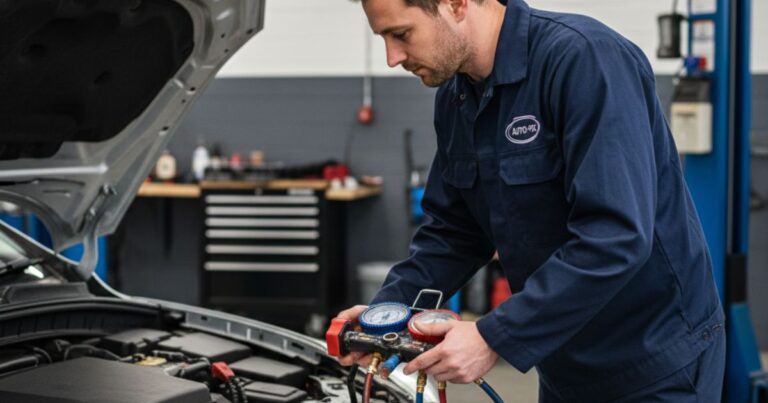
They will start by testing the system pressure. That tells them if the compressor is engaging and if there is any gas left. Next comes a visual check. They look for oily patches, damaged pipes, or a dented condenser at the front of the car.
If the system is empty, they add a special dye and pressurise it. Then they use a UV lamp to find exactly where the dye is escaping. Once the leak is found, they replace the faulty part.
If the compressor has failed, they will also swap out the receiver drier. That little part acts like a sponge and can fail if debris gets into it.
Finally, they vacuum the system to pull out any moisture. Then they recharge it with the exact amount of R1234yf gas and the right lubricating oil. When you pick the car up, it should blow ice cold again.
What You Can Check Yourself
You do not need to be a mechanic to do a few basic checks. Here is what is safe to try at home.
- Swap the cabin filter. It is usually behind the glovebox. If it looks clogged with leaves and dust, change it. A fresh filter costs around £15 and can make a huge difference to airflow.
- Check the fuses. Look in your owner’s manual to find the AC and blower motor fuses. If one has blown, replacing it costs pennies. If it blows again, you have a wiring issue that needs a professional.
- Listen for the click. With the engine running and AC on, pop the bonnet. You should hear a click every few seconds as the compressor clutch pulls in. No click might mean no gas or a dead clutch.
- Clean the front. The condenser sits right behind the grille. A gentle spray from a hose can wash away bugs and debris, helping it cool more effectively.
When to Stop Dipping and Start Booking
DIY checks are fine up to a point. But if any of these things happen, it is time to book into an auto repair shop:
- The system has no gas at all. That nearly always means a leak.
- You hear grinding or knocking noises from the compressor.
- The AC works one day and not the next.
- You drive an electric car and notice the range dropping when you use climate control.
Simple Habits to Avoid Big Repair Bills
Prevention really does work. A few small habits can keep your AC healthy for years.
- Run it once a week. Even in January, turn the AC on for ten minutes. It keeps the seals lubricated and stops them drying out.
- Don’t live in recirc mode. On the motorway, let fresh air in. It stops the cabin getting stuffy and reduces strain on the system.
- Book a summer check. A quick health check before the hot weather arrives costs very little. It might catch a slow leak before it breaks down.
- Protect the front. If you do lots of miles, consider a grille cover. It stops stones from damaging the delicate condenser fins.
Final Thoughts
A broken air conditioner in 2026 is more than an annoyance. It affects your comfort, your safety, and even your fuel or electric range. But if you catch the warning signs early, you can fix the problem before it turns into a huge bill.
Whether you need a simple regas or a full compressor swap, a good auto repair shop will guide you through it. They will explain what is wrong, what needs doing, and how much it will cost. No guesswork. No nasty surprises.
So if your car is blowing warm air, making odd noises, or smelling a bit musty, do not put it off. Book it in. Get it sorted. And enjoy the rest of your summer staying cool behind the wheel.
Make Youth Fulyarn your first stop. Use it to research automobiles, compare models, and read expert reviews.