
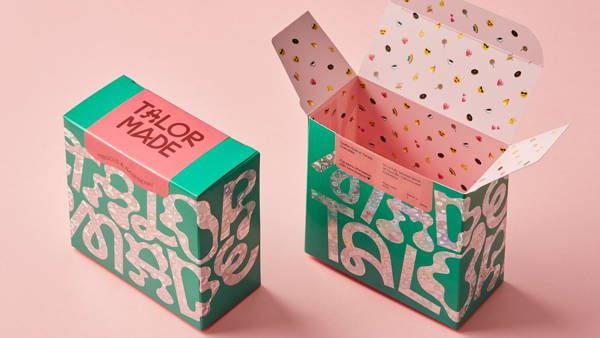
Walk into any warehouse, scroll through any online store, or unbox any delivery — and you will notice something immediately. Most packaging looks exactly the same. Brown. Plain. Forgettable. The box does its job, sure. It gets the product from point A to point B. But somewhere along the way, it missed an opportunity — the chance to make a customer feel something before they even see what is inside.
That opportunity has a name. It is called custom tuck box packaging. And the brands quietly winning on retail shelves and in delivery experiences around the world have already figured out what most businesses are still learning: the right box does not just hold your product. It sells it.
The Quiet Genius of the Tuck Box
There is something almost elegantly simple about how a tuck box works. No adhesive. No complicated assembly. No fumbling with tape at the packing station during a busy dispatch morning. The flap slides in, the structure holds, and the box is ready. That simplicity is not an accident — it is engineering that has been refined over decades of practical use.
But simplicity is only one part of the story.
Flat-pack efficiency is the feature that transforms tuck boxes from a smart packaging choice into a genuinely strategic business decision. A standard pre-assembled box arrives at your facility already occupying its full dimensional volume. A flat-packed tuck box arrives as a compact sheet — stacking efficiently, storing cleanly, and consuming a fraction of the warehouse space that rigid alternatives demand. For growing businesses paying per square foot for storage, that difference lands directly on the bottom line.
Then there is the surface area. Every panel of a tuck box — front, back, left side, right side, interior flaps — is a canvas. Most packaging formats give you one or two decent print surfaces. Tuck boxes give you the whole story. Brand name, product description, ingredient list, usage instructions, sustainability statement, QR code linking to a loyalty program — it all fits, and it all works together to communicate a brand identity that customers remember.
And the environmental dimension matters more with every passing year. Tuck boxes manufactured from paperboard — a renewable, recyclable, biodegradable material — align naturally with the sustainability values that modern consumers bring to every purchasing decision. This is not niche positioning anymore. It is mainstream expectation.
Four Styles, Four Different Jobs
Not every tuck box is built the same way. The configuration of the closing flaps — how they fold, which direction they tuck, whether the base is pre-formed — changes how the box performs in real-world use. Understanding these differences helps brands make packaging decisions that serve both their product and their operations.
Straight Tuck End Boxes
Both closing flaps — top and bottom — tuck in the same direction in this configuration. The practical result is a box face that is completely smooth and uninterrupted on its primary display surface. No fold lines cutting across the artwork. No structural elements competing with the brand graphics. Just a clean, continuous canvas that lets the design speak at full volume.
This is the configuration chosen by cosmetics brands, premium skincare lines, specialty candle companies, and small electronics manufacturers — product categories where the visual presentation on the retail shelf or in the unboxing moment is doing active selling work. When appearance carries commercial weight, straight tuck end delivers.
Reverse Tuck End Boxes
Here, the top and bottom flaps tuck in opposite directions — toward the front and toward the back respectively. This opposing tension creates a box structure with notably better resistance to accidental opening under handling stress. The material usage is also more efficient in this configuration, which translates to lower per-unit production costs at volume.
Pharmaceutical brands, food producers, toy manufacturers, and general retail product businesses gravitate toward reverse tuck end boxes when they need a dependable, cost-conscious solution that balances security with economy. It is the practical workhorse of the tuck box family — less visually dramatic than straight tuck, but more forgiving under real distribution conditions.
Tuck Top Auto Bottom Boxes
This configuration keeps the familiar tuck closure at the top while replacing the manually assembled base with a pre-glued bottom panel that locks automatically the moment the box is opened from flat. Pull it open — click — the base is formed, solid, and ready to load.
The time saving during high-volume packing runs is genuinely significant. When your team is processing hundreds or thousands of units in a single shift, eliminating the manual base-folding step from every single box adds up to meaningful labor efficiency. This configuration is the natural choice for gift sets, bundled food products, heavier retail items, and electronics packaging — categories where both structural integrity and packing speed matter simultaneously.
Snap Lock Bottom Tuck Boxes
The snap lock bottom uses a series of interlocking flaps that weave together to create a base of exceptional structural strength. Unlike the auto bottom configuration, snap lock requires manual assembly — the flaps are pressed and interlocked by hand. The trade-off is a base that handles heavier loads with greater confidence than any other tuck box configuration.
Glass bottles, ceramic products, heavy retail goods, and any product category where base failure during transit would be catastrophic rely on snap lock bottom construction. The assembly time investment is real — but so is the peace of mind that comes from knowing the base will not give way under load.
What Tuck Boxes Actually Do for a Brand
The commercial case for Custom printed boxes with logo is built on outcomes that extend well beyond the physical box itself.
A customer who receives a product in thoughtfully designed, well-constructed packaging experiences the brand before they experience the product. The weight of the box in their hand. The clean resistance of the tuck flap opening. The brand graphics revealing themselves as the packaging unfolds. These are sensory moments that create emotional memory — and emotional memory is what drives repeat purchase, positive reviews, and the kind of enthusiastic word-of-mouth that no advertising budget can manufacture.
The flat-pack storage efficiency reduces logistics costs in ways that compound across growing order volumes. The wide-format print surface supports brand storytelling that builds recognition across retail channels and direct-to-consumer delivery simultaneously. The sustainable material credentials communicate values that resonate with the consumer expectations defining purchasing behavior in 2025.
Custom tuck boxes, in short, do the work that packaging is supposed to do — protect the product, present the brand, and earn the customer’s trust before the first word is spoken.
Choosing the Right Configuration for Your Product
The decision between straight tuck, reverse tuck, auto bottom, and snap lock bottom is not a matter of personal preference — it is a functional specification driven by product weight, handling requirements, packing volume, and retail presentation priorities.
Light products with strong visual branding requirements belong in straight tuck end boxes. Products that need reliable security at accessible price points belong in reverse tuck end. High-volume operations packing heavier items belong in tuck top auto bottom. Heavy, fragile, or high-value products that cannot afford base failure belong in snap lock bottom construction.
Get this specification right, and the box works invisibly — doing its job so reliably that the customer never thinks about it. Get it wrong, and the box becomes the story — for exactly the wrong reasons.